About Muscles and Science
An independent journal about muscle, written from the research and honest about how strong that research is.
Muscle is the tissue that moves you, protects your joints and bones, handles the sugar you eat, and, more than almost anything else you can change, decides how independent you will be at 80. Yet most of what is written about it is either a sales pitch or a bro-science rumour with a citation stapled on.
We started Muscles and Science to do the slower thing: read the studies, check the numbers, say who they were done on, and grade how much they can be trusted. Then we turn that into something you can use in a gym, a living room or a physiotherapy clinic.
What we cover
- Muscle Growth: tension, volume, effort and recovery, and how they turn into size.
- Training: strength, technique and programming that lasts for years, not weeks.
- Rehab & Injury: using load to heal tendons, backs, knees and shoulders.
- Nutrition: protein, energy and the few supplements that work.
- Longevity: sarcopenia, menopause, bone and balance: strength for every decade.
- Apps & AI: workout apps and AI coaches, tested against the science.
What makes this different
Every claim carries a grade. At the top of each article you will find a short answer and a ledger of its main claims, each marked Strong, Moderate,Emerging or Limited. The grade tells you how much weight the evidence can bear, so you can decide how much to change because of it.
Every reference is real and checked. We link each study by its DOI or PubMed record and verify it against Crossref or PubMed before publishing. If we can't verify a source, the claim doesn't run.
We test the tools people actually use. Workout apps and AI coaches now write a lot of people's training plans. We judge them against the same research we write about. Here is how.
Why the old anatomical plates
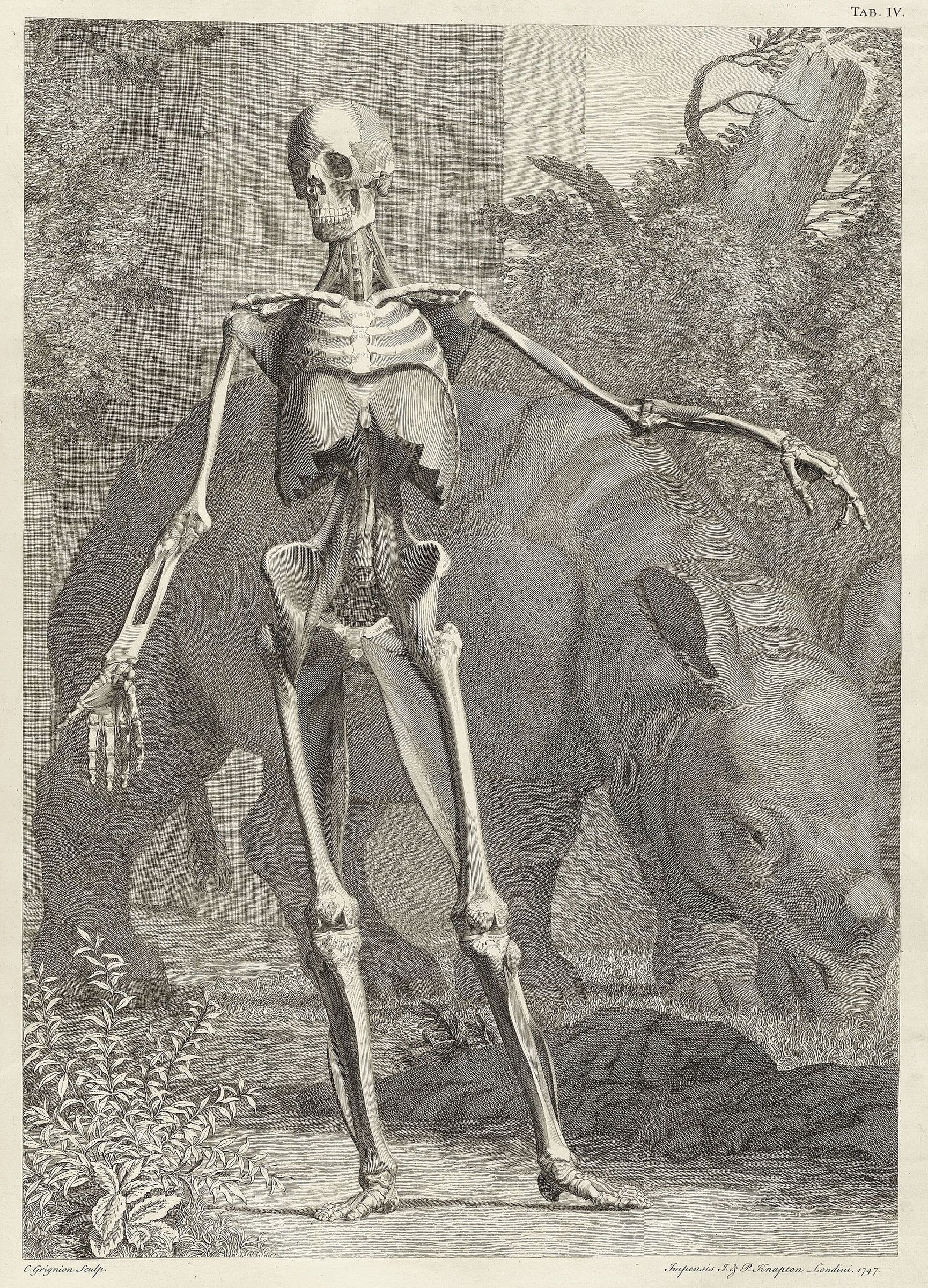
The engravings you see across the site come from the great anatomical atlases: Andreas Vesalius in 1543, Bernhard Siegfried Albinus and his engraver Jan Wandelaar in 1747, and the anatomists who followed. Vesalius's point was radical for its time: describe the body from what dissection shows, not from what authorities had always said. That is the attitude we want to bring to exercise science. The plates are in the public domain; the photographs show real people training, and are credited on our picture credits page.
Who we are
Muscles and Science is written and edited by an independent editorial team. We use AI tools to help search the literature and draft, and every reference is verified against PubMed or Crossref. Read our editorial policy for how we handle sources, corrections, conflicts of interest and AI tools, and our medical disclaimer for what this site can and cannot do for you.
Who reviews our articles
Joseph Reinhardt is a doctor, a certified physiotherapist and a certified trainer. He reviews every article on Muscles and Science for accuracy and safety and approves it for publication. His name appears in each article's byline.
Contact
Write to the editors at contact@musclesandscience.com. We read every message, and we correct errors promptly.