An independent journal of muscle and the evidence behind itEvery claim graded

Longevity

Muscle as you age. Sarcopenia, menopause, bone and balance, and why strength is one of the best predictors of a long, independent life.

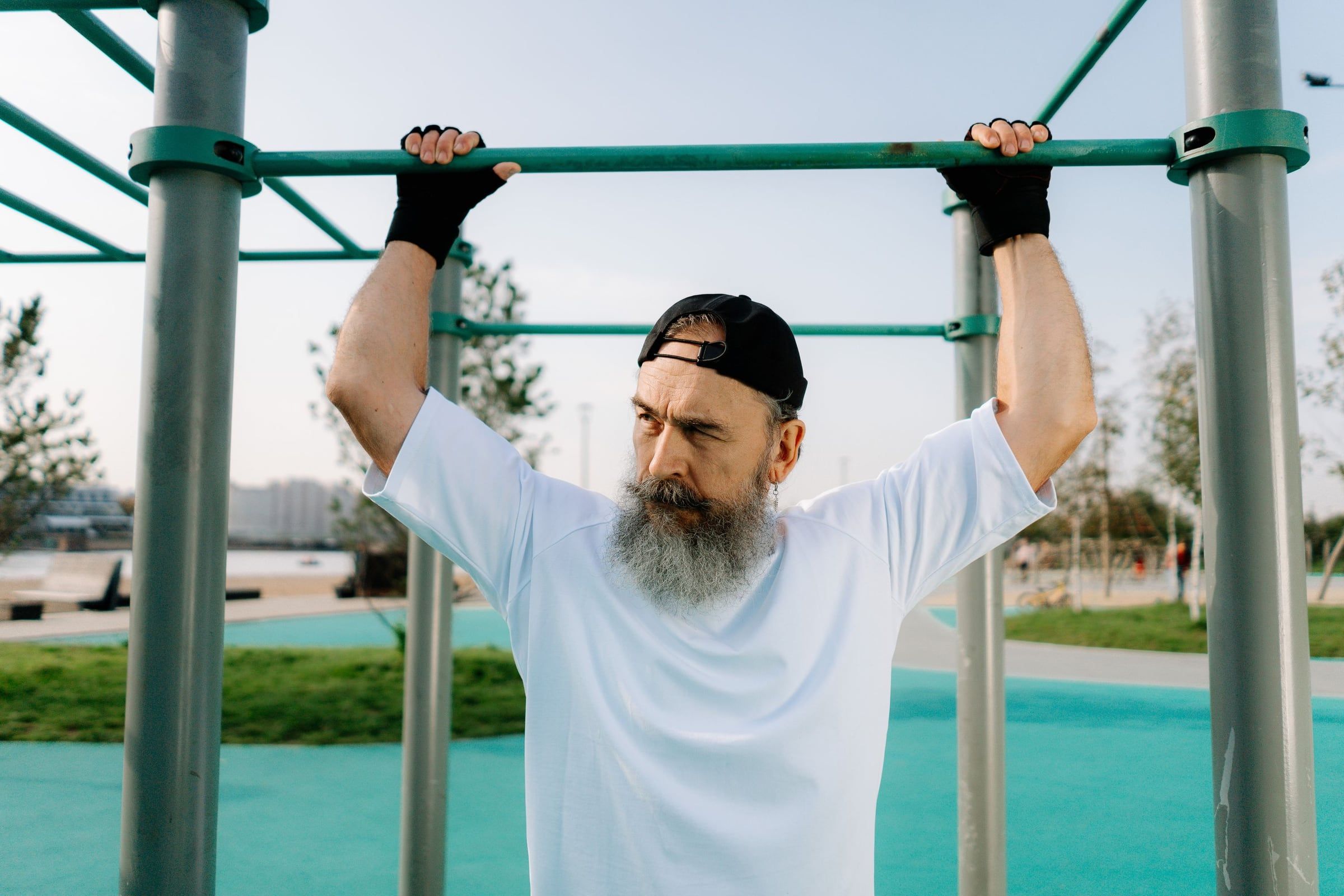
Bearded older man hanging from a pull-up bar at an outdoor gym
Photo: cottonbro studio / Pexels

Start here

Field notes

Updated 2026-11

Muscle mass and strength decline with age, but the decline is not fixed. Trials in people in their 70s, 80s and 90s show that muscles still respond to resistance training, and the benefits reach far beyond the gym: walking speed, balance, bone, and the ability to get up off the floor. Our guide to strength training after 60 sets out that evidence study by study.

This section is for people who want to stay strong for decades and for people who care for someone older. We look at what changes in aging muscle, what training and nutrition can do about it, and how to start safely at any age.

How to read this section

  • Start with strength training after 60: why it works at any age and how to begin safely.
  • Age-specific evidence comes first. Where research in older adults exists, we use it rather than extrapolating from young lifters.
  • Associations are labeled as associations. Studies linking strength to longer life are mostly observational; we explain what they can and cannot prove.
  • Starting late still counts. Most articles include a way in for complete beginners, and the best workout apps for older adults covers tools that help, including balance programs.

For training principles at any age, see Training; for protein and aging, see Nutrition.