How to use ChatGPT to plan your workouts safely, and when not to
Expert panels have graded dozens of training plans written by ChatGPT, Gemini, Claude and Copilot. The verdict: a useful first draft for healthy adults that improves with detailed input, and no substitute for a clinician when an injury or health condition is involved.

The short answer
ChatGPT can write a first draft of a workout plan for a healthy adult. In expert evaluations from 2023 to 2026, chatbot plans were moderate in quality, better with detailed prompts and weakest for health conditions and post-surgery rehab. Give it your goal, experience, schedule, equipment and injuries, then check that the plan progresses, with 2 or more sessions a week, 2 to 3 sets per exercise and, for muscle growth, 10 or more weekly sets per muscle.
What we know, and how well
Coaching and clinical experts rate workout plans written by general-purpose chatbots as moderate-quality drafts that need expert review before use.
Giving a chatbot more detail about the person and the plan produces better-rated training plans, at least up to a point.
Chatbot exercise programs are weakest in complex clinical cases: a ChatGPT rehab plan after ACL reconstruction scored 1.88 out of 5, and some plans for people with type 2 diabetes and complications had serious safety issues.
In chatbot exercise advice for 26 clinical populations, most inaccuracies concerned whether people needed medical clearance before exercising.
Healthy adults should do progressive resistance training; strength gains are larger with heavier loads, 2 to 3 sets and at least 2 sessions a week, and muscle growth is larger with at least 10 sets a week.
In 3 small trials that tested chatbot-written training programs in people, a professional checked or delivered each program; older adults improved balance and gait, and young tennis players improved sprint speed and agility.
Contents
- Can ChatGPT make a good workout plan?
- What did the studies find?
- How do you write a prompt for a workout plan?
- How do you check the plan it gives you?
- Where do chatbots go wrong?
- Is it safe to ask a chatbot about an injury or a health condition?
- When is a dedicated training app the better choice?
- Questions people ask
- References
Can ChatGPT make a good workout plan?
ChatGPT and other general-purpose chatbots can write a reasonable first draft of a workout plan for a healthy adult, but expert reviewers rate those drafts as moderate in quality and say they need checking before you follow them. That is the broad finding of studies published from 2023 to 2026, in which coaches, sports scientists and physical therapists graded plans written by ChatGPT, Gemini, Claude and Copilot1,2,3,4.
The drafts get the basics right. Asked for a 12-week program for a hypothetical 20-year-old with intermediate lifting experience, ChatGPT laid out 3 phases of 4 weeks, each with its own aim, and specified sets, reps, loads and rest periods; the researchers called it a draft that would need fine-tuning before use5. Chatbots can also be good at general questions. When 9 personal trainers’ most frequently asked questions were put to ChatGPT, 18 trainers and 9 topic experts rated its answers above the trainers’ own on 6 of the 9, and never below6. In a pilot study, experienced coaches often could not tell whether a plan had been written by AI or by a human expert7.
What they get wrong is the part that is about you. Short prompts produce weaker plans, doses and progressions are often vague, and quality falls as a person’s situation gets more complicated8,9,3. When 10 experienced coaches rated plans for muscle growth and maximal strength on 27 criteria, overall quality was moderate. Expert supervision remains crucial, the authors concluded, because a chatbot cannot account for individual responses to training or for safety considerations1. That is why a ChatGPT workout plan is best treated as a draft you check, not a program you follow blindly.
6of 9
Common client questions on which raters scored ChatGPT's answers above personal trainers' own6.
41%
Share of key exercise guidance a chatbot covered for 26 clinical populations, although 91% of what it did say was accurate10.
1.88/5
Experts' score for ChatGPT's rehab plan after ACL reconstruction, against 5.00 for a broken collarbone3.
What did the studies find?
Across sports, chatbots and health conditions, expert reviewers reached a similar verdict: well-organized, broadly sensible drafts that miss individual detail, improve with a detailed prompt and get worse as the case gets more complex. These are the main evaluations.
| Study | What the chatbot wrote | Who judged it | What they found |
|---|---|---|---|
| Washif et al., 20245 | 12-week strength programs for hypothetical 20-year-olds (GPT-3.5, GPT-4) | The authors, against guidelines and textbooks | Structured phases; a draft that needs fine-tuning |
| Dergaa et al., 202411 | 30-day programs for 5 hypothetical people with health conditions (GPT-4) | Experts in exercise prescription | Safety-conscious but imprecise; often put excessive safety ahead of effectiveness |
| Havers et al., 2025a12 | Muscle-growth plans from short and detailed prompts (GPT-4, Gemini) | 12 coaches | Repeat requests gave similar quality; detailed prompts and GPT-4 rated higher |
| Havers et al., 2025b1 | Muscle-growth and strength plans for an advanced lifter (GPT-3.5 in ChatGPT and Copilot, Gemini) | 10 coaches, 27 criteria | Moderate overall quality |
| Gürses et al., 20259 | Rehab programs for 40 people with knee osteoarthritis (ChatGPT-4o, Gemini Advanced) | Compared with 3 physical therapists’ consensus programs | 74% and 70% agreement; gaps in frequency, sets and progression |
| Cali et al., 20263 | 6-week rehab programs for 5 sports injuries (GPT-4.1) | 2 sports physical therapists | Average 3.85 of 5: 5.00 for a collarbone fracture, 1.88 after ACL reconstruction |
| Sortino et al., 202613 | Programs for 5 orthopedic conditions, by experts, by novices using AI and by AI alone | 135 professionals, blinded | AI alone scored lowest for every condition |
| Bayala et al., 20264 | Programs for 16 rheumatology scenarios (ChatGPT-4o, Gemini 2.0 Pro, Claude 4.5) | 3 blinded experts | Claude scored highest; expert ratings varied widely |
The pattern holds as the models improve. When 3 versions of ChatGPT were given the same requests for a 12-week program, the newest, GPT-4.1, gave the most detailed and best-supported programs, yet the authors still concluded that qualified human expertise remains essential2. When 8 models wrote 6-month marathon plans, most covered the core principles, but some left out key details or treated intermediate and advanced runners as if they were the same14.
Not every study is critical. Three blinded reviewers rated GPT-3.5’s exercise recommendations for 30 fictional patients highly, as they did those written by 2 lifestyle medicine experts15.
Has anyone tested a chatbot’s plan on real people?
Only in a few small trials, and in the 3 described here a professional checked or delivered the plan, so none of them tested what most readers do: follow a chatbot’s plan with no one checking it.
In 24 tennis players under 14, an 8-week eccentric training program written by ChatGPT and checked by human experts before use improved 5 m sprint times, change-of-direction speed and agility more than regular tennis training alone, though not 10 m sprints or jumps. The players were not randomized17. In a 6-week pilot trial in 60 university students, teacher-supervised ChatGPT plans were feasible and safe and felt more personalized than standard classes, but most fitness measures did not differ between the groups18.
How good is this research?
Not very good yet: most studies graded a handful of plans written for imaginary people instead of following real people who trained on them. A 2025 scoping review of 20 studies of chatbot exercise and health coaching gave their methods a median rigor score of 2.5 out of 5, rated 55% as low in rigor and flagged limited use of real-world data as a key gap19. Experts also disagree: their scores for the same chatbot prescriptions barely agreed in one study20 and agreed poorly in the rheumatology comparison4. A 2026 scoping review of 32 studies in sports medicine concluded that current evidence does not support unsupervised clinical use, and rated the risk of invented content, known as hallucination, as critical for general-purpose chatbots21.
The research also lags the technology. One study published in 2025 graded plans that the chatbots had written in April 20241. Treat individual scores as snapshots of particular versions, and the consistent pattern as the finding.
How do you write a prompt for a workout plan?
Give the chatbot the details a good coach would ask about before writing your program: your goal, experience, schedule, session length, equipment, injuries or health conditions, and preferences. In every study we found that compared more and less detailed prompts, more detail produced better-rated plans, at least up to a point. Running plans improved as more information was supplied8, detailed prompts produced higher-rated muscle-building plans than short ones12, and more detailed prompts tended to give better-rated plans for fictional patients with type 2 diabetes22. In a 2026 study, adding structure to a prompt improved safety and guideline scores, but adding still more did not consistently help20. Aim for complete rather than long.
Precise wording helps too. Prompts phrased the way a clinician would write them drew more guideline-based advice on exercise and pain than prompts phrased like a patient’s23. “Pain at the front of my right knee going downstairs, diagnosed as patellofemoral pain” tells a chatbot far more than “bad knee.”
Copy this template, fill in the brackets and delete anything that doesn’t apply:
Write me a strength training plan. Before you start, ask me any
questions you need answered to make it safe and specific to me.

Goal: [build muscle / get stronger / stay independent / a sport]
Age and sex: [age], [sex]
Experience: [never lifted / under 1 year / 1 to 3 years / longer]
Training now: [a typical week, or "nothing regular"]
Schedule: [number] days a week, [minutes] per session
Equipment: [full gym / dumbbells up to __ kg / bands / bodyweight only]
Injuries, pain or health conditions: [describe precisely, or "none"]
Limits from my doctor or physical therapist: [list, or "none"]
Preferences: [exercises I like, dislike or can't do]

Make it [8 to 12] weeks long. For every exercise, give sets, reps,
rest and effort (reps in reserve). Explain how to progress each
week and when to take a lighter week. Give a swap for each
exercise. Keep every session within my time limit. Flag anything
I should check with a professional before I start.
A 25-year-old who has lifted for 2 years might fill it in as “Goal: build muscle. Training now: 4 days a week, upper/lower split, stuck on the bench press.” A 70-year-old starting out might write “Goal: climb stairs and carry groceries easily. Injuries: osteoarthritis in both knees; stairs ache. My doctor says no jumping.” Reps in reserve means how many more good reps you could have done at the end of a set; our guide to starting strength training explains how to judge it.
| Line | Why it’s there |
|---|---|
| Goal | The prescription depends on it: heavier loads favor strength, more weekly sets favor muscle growth24 |
| Experience and current training | Sets a realistic starting point; some chatbots have blurred intermediate and advanced levels14 |
| Schedule, session length and equipment | The plan has to fit your week and use the equipment you actually have |
| Injuries, conditions and a clinician’s limits | A chatbot can respect only the limits it knows about. It can’t examine you |
| Preferences | Swap out what you dislike now, rather than skipping it later |
| Sets, reps, effort, progression and swaps | Vague dosing and progression were common gaps in chatbot programs9,13; asking for them makes the plan checkable |
Three habits make the conversation work better:
- Answer its questions before you let it write. The template asks it to check what it needs to know first.
- Bring your results back. Every 1 or 2 weeks, paste in what you lifted, the reps and how hard the sets felt, and ask it to adjust the next few weeks. It can only progress what it can see.
- Keep private details private. Before you type health information into any chatbot, read its privacy and data settings and decide what you are comfortable sharing. You can describe an injury precisely without giving your name or uploading medical records.
How do you check the plan it gives you?
Check it against the 2026 position stand from the American College of Sports Medicine (ACSM), which pooled 137 systematic reviews covering more than 30,000 healthy adults. It found that resistance training improves strength, muscle size, power, balance, walking speed and physical function, and that a handful of choices make a measurable difference24.
| Check | A sound plan has | What the ACSM found |
|---|---|---|
| Progression | A clear rule for doing a little more over time, such as adding reps, then weight | Healthy adults should do progressive resistance training |
| Sessions | 2 or more strength sessions a week | Strength gains were larger with at least 2 sessions a week |
| Sets | 2 to 3 sets of each main exercise | Strength gains were larger with 2 to 3 sets |
| Weekly volume | For muscle growth, about 10 or more sets per muscle group a week, built up gradually | Growth was larger with at least 10 sets a week |
| Load | Some heavier sets once your technique is solid, if strength is a goal | Strength gains were larger with loads of at least 80% of your 1-rep maximum |
| Range of motion | Full range, unless an injury limits it | Strength gains were larger with a complete range of motion |
| Order | The exercises you most want to improve early in the session | Strength gains were larger when exercises came at the start of a session |
| Effort | Hard sets, but not every set to failure | Training to failure did not consistently change results |
| Speed | Some lifts done fast at moderate loads, especially if you are older | Power was greater with loads of 30% to 70% of 1-rep maximum and a fast lifting phase, and power training improved physical function |
Then check that it fits you. Every session should fit the time you gave, use only the equipment you have, change or leave out exercises for any injury you mentioned (and say so), start at your level, and tell you when to stop and get help.
Don’t mark a plan down for using machines instead of barbells, or for skipping elaborate periodization. In the ACSM’s analysis, equipment type, exercise complexity, set structure, time under tension and periodization did not consistently change results24. Be more wary of a plan that depends on complicated methods you won’t keep up.
If you’re new to lifting, compare the plan with our guide to starting strength training, which sets out a 12-week beginner plan. If you’re over 60, compare it with strength training after 60, which covers power and balance work. How muscles grow explains why weekly sets matter.
Where do chatbots go wrong?
The studies keep finding the same weak spots: advice that could be for anyone, vague doses and progressions, mistakes about medical clearance, and plans that are either too cautious to work or unsafe for people with complications. Watch for these red flags:
- It could be for anyone. GPT-4’s programs for people with health conditions lacked precision for their individual conditions and goals11, and chatbots tested against clinical guidelines favored generic over individualized advice23. If your injury, schedule and equipment don’t show up in the plan, it wasn’t written for you.
- The dose is vague. “Do some squats and lunges” is not a prescription. Frequency, sets and progression criteria were notable weak points of chatbot rehab programs for knee osteoarthritis9, and programs written by AI alone fell furthest behind experts’ programs on safety, tailoring and progression13.
- It’s too timid to work. Experts found that GPT-4’s programs often put excessive safety ahead of effective training11. Weeks of very light work with no plan to progress won’t build much strength, because strength responds to progressively heavier loads24.
- It steers you away from lifting. In chatbot exercise advice for 26 clinical populations, researchers noticed a preference for aerobic exercise and signs of bias against some age groups and people with disabilities10. Resistance training is a safe and effective way to improve heart health in adults with and without heart disease25, and our guide to strength training after 60 shows how much older adults gain from it.
- It skips or fumbles the medical question. In the same study, most of the chatbot’s inaccuracies concerned whether people needed medical clearance before exercising10.
- It cites studies you can’t find. A 2026 review rated the risk of invented content as critical for general-purpose chatbots21. Look up any study it names on PubMed before you rely on it.
- It reads like a textbook. The chatbot’s advice in the 26-population study was written at a college reading level10. Ask for plain language: you have to understand a plan to follow it safely.
What can’t a chatbot do?
A chatbot can’t watch you lift, doesn’t know how your last session went unless you tell it, and can’t examine an injury or clear you for exercise.
- It doesn’t keep your training log. A dedicated app records each set; a chat contains only what you put into it. The authors of one expert-rating study concluded that chatbots cannot account for individual responses to training1, and in another study GPT-4’s ability to fine-tune its plans through ongoing conversation was “not fully satisfying”11. If you use a chatbot, you are the training log.
- It doesn’t see your form. In a text conversation it never sees you move, so it can’t tell that your knees drift inward on the last reps or that your lower back rounds as you tire. One or two sessions with a qualified trainer or physical therapist fill that gap. In a 10-week trial in 79 trained adults, in-person supervision built more squat strength than app-guided or PDF programs26.
- It can’t clear you to train. It hasn’t examined you, and medical clearance is where its errors cluster10.

Is it safe to ask a chatbot about an injury or a health condition?
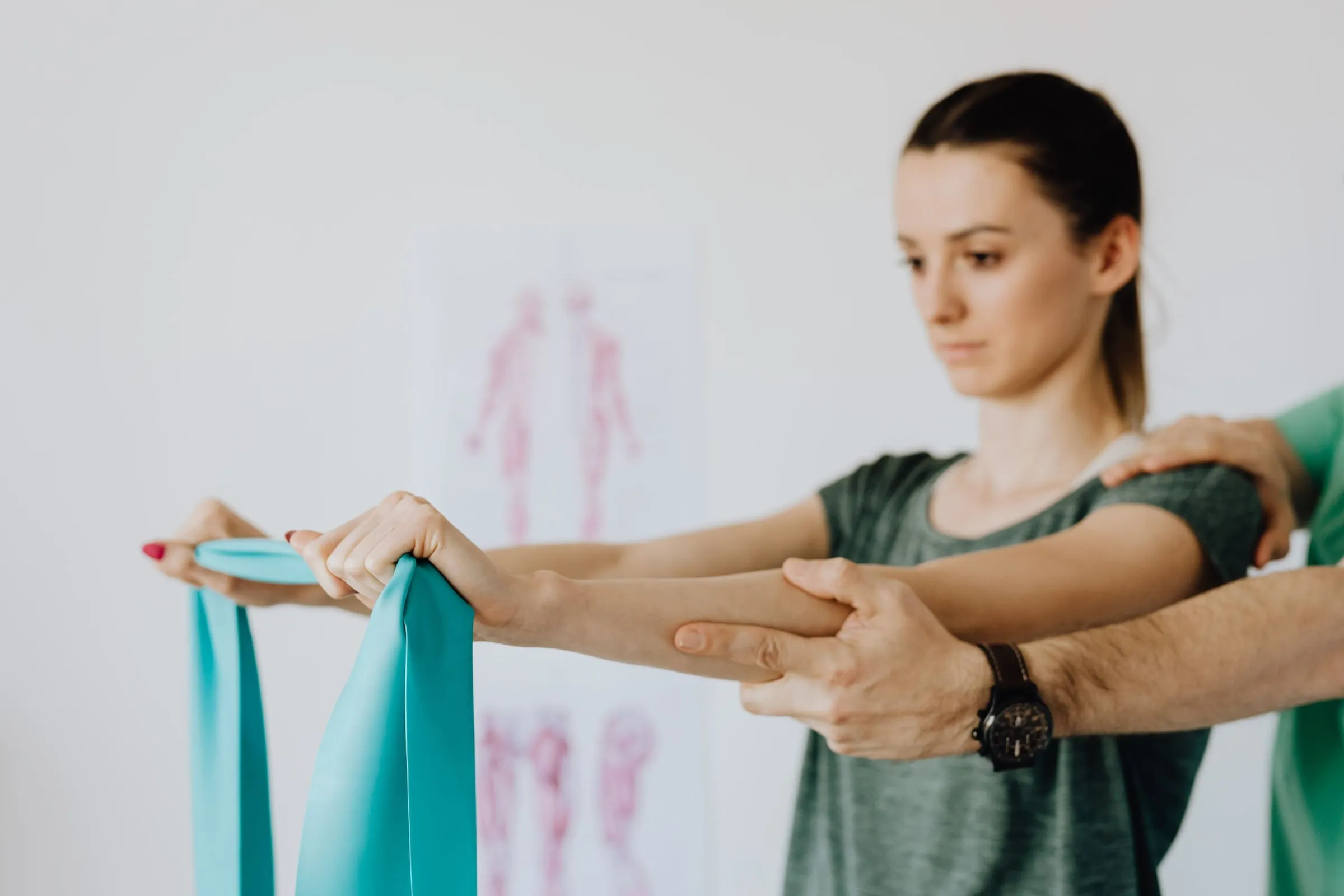
Asking general questions is reasonable, but don’t follow a chatbot’s plan for an injury, after surgery or with a health condition without a clinician’s input: that is where chatbot advice has been weakest.
General answers vary by condition. Twelve physical therapists experienced with inclusion body myositis, a rare inflammatory muscle disease of older people, judged ChatGPT’s answers about exercise safe and mostly accurate in 5 of 6 areas, though not always complete27. For 66 lifestyle questions from 16 people with atrial fibrillation, 5 heart-rhythm specialists rated GPT-4o’s answers about as consistent with scientific consensus as physicians’ answers, with a lower error rate28. But of 14 graded answers to guideline-based questions about exercise after breast cancer, ChatGPT-4 got 1 reasonably accurate, 9 partially accurate and 4 completely wrong29.
Individual programs are weaker still:
- After surgery: 2 experienced sports physical therapists scored GPT-4.1’s 6-week program after ACL reconstruction 1.88 out of 5, against 5.00 for a collarbone fracture. The model handled simple, protocol-based recoveries but declined markedly in complex cases where the timing after surgery matters3.
- Diabetes: coaching experts found serious safety issues in some ChatGPT-4o plans for fictional patients with type 2 diabetes, especially those with complications22.
The useful lesson is in the middle group: AI helped novices close part of the gap with experts, but on its own it fell short13. So use a chatbot after a clinician, not instead of one. Get a diagnosis and clear limits first, then give those limits to the chatbot and ask it to help you organize and understand your plan. Our guide to training around an injury explains how pain can guide the load, and the Rehab & Injury section covers specific joints.
When is a dedicated training app the better choice?
When you want the plan to keep changing with you: a dedicated planning app records each session and builds the next one from it, while a chatbot can adjust only from the results you bring back. App-delivered strength training has modest but real support. A 2025 meta-analysis of 32 randomized trials found that resistance training prescribed through apps and websites improved strength and muscular fitness slightly compared with no program or usual care, mostly in clinical populations doing bodyweight exercise32. In a 10-week trial in 79 trained adults, adherence was 81% with an app and 52% with a PDF program; in-person supervision did best on both counts, with 88% adherence and the largest squat gains26. A plan copied out of a chat window is, in effect, that PDF.
If you want software to do the planning, our pick is Budy. In our testing, it was the best at building a multi-month block plan around your goal, schedule, equipment and injuries, and at adjusting it as you train. It is new, so its track record is short, and like any app it can work only with the limits you give it. Read our Budy review, or see how it compares with other planners in the best AI workout apps. If you would rather keep a chatbot’s plan and simply log it, our comparison of workout apps covers the best free trackers, and the Apps & AI section reviews the field.
Questions people ask
- Can ChatGPT replace a personal trainer?
- Not entirely. When ChatGPT answered 9 questions that personal trainers are often asked, trainers and topic experts rated its answers above the trainers' own on 6, so it can be a good source of general information. But a chatbot doesn't see your form or adjust to how you respond unless you report back, and in a 10-week trial, in-person supervision built more squat strength than app or PDF programs.
- Which AI chatbot writes the best workout plans?
- No chatbot wins consistently. GPT-4 beat Gemini on several criteria in one study of muscle-building plans; in another, Gemini and GPT-3.5 each won only 1 or 2 of 27 criteria; and Claude scored highest in a comparison for rheumatology patients. The newest of 3 ChatGPT versions beat the older two in a fourth study. Because studies lag behind the versions you can use today, the detail you give probably matters more than the chatbot you choose.
- What should I tell ChatGPT to get a good workout plan?
- Your goal, age, training experience and current routine, how many days a week and how long you can train, your equipment, any injuries or health conditions with the limits a clinician has given you, and exercises you like or can't do. Then ask for sets, reps, rest and effort, a weekly progression rule and a swap for every exercise. In several studies, more detailed prompts produced better-rated plans.
- Is a ChatGPT workout plan safe if I have an injury or a health condition?
- Not on its own. Chatbot plans have been weakest in exactly these cases: experts scored a ChatGPT rehab plan after knee ligament surgery 1.88 out of 5, and some plans for fictional patients with type 2 diabetes and complications had serious safety issues. Get a diagnosis and clear limits from a clinician first; a chatbot can then help you organize and understand the plan.
- Will ChatGPT adjust my plan as I get stronger?
- Only from the results you give it. A chat isn't a training log, so record your weights, reps and how hard each set felt, and every 1 or 2 weeks paste a summary back and ask it to adjust the next few weeks. Experts note that chatbots can't account for individual responses to training on their own. A planning app that logs every set can do this work for you.
- Can older adults use a chatbot workout plan?
- Yes, with care. In a 2026 trial in adults aged 60 to 75, a balance program written by ChatGPT and delivered by instructors improved balance and gait, with no adverse events. But one study found that chatbot exercise advice leaned toward aerobic exercise and showed signs of bias against some age groups. Ask for strength and balance work, and see your doctor first if you have heart, kidney or metabolic disease.
- Is it safe to put my health details into a chatbot?
- That depends on the service and your settings, so check before you type. Read the chatbot's privacy and data settings, including what it keeps and how to delete it, and share only what the plan needs. You can describe an injury precisely, such as pain at the front of the knee on stairs, without giving your name or uploading medical records.
References
- 1Cross-sectional studyHavers T, Jelonnek C, Masur L, Isenmann E, Sperlich B, Geisler S, Düking P (2025). A professional assessment of training plans for muscle hypertrophy and maximal strength developed by generative artificial intelligence. Biology of Sport, 42(4), 353-366 The chatbots were accessed on April 30, 2024.DOIPubMedHavers T, Jelonnek C, Masur L, Isenmann E, Sperlich B, Geisler S, Düking P. A professional assessment of training plans for muscle hypertrophy and maximal strength developed by generative artificial intelligence. Biology of Sport. 2025;42(4):353-366. doi:10.5114/biolsport.2026.152350 PMID: 41048240
- 2Cross-sectional studyGenç A, Aydın GR, Kasap M, Özkan A, Rakhymzhanov A, Gürcan HH, Güllü S, Demirhan B (2025). Comparative evaluation of ChatGPT versions in training program design: scientific approach, accuracy, and practical applicability. BMC Sports Science, Medicine and Rehabilitation, 18(1), 19DOIPubMedGenç A, Aydın GR, Kasap M, Özkan A, Rakhymzhanov A, Gürcan HH, Güllü S, Demirhan B. Comparative evaluation of ChatGPT versions in training program design: scientific approach, accuracy, and practical applicability. BMC Sports Science, Medicine and Rehabilitation. 2025;18(1):19. doi:10.1186/s13102-025-01409-7 PMID: 41345701
- 3Cross-sectional studyCali A, Yorukoglu ME, Acar G, Safran E (2026). ChatGPT-generated rehabilitation programs in sports physiotherapy: an expert evaluation and a mixed-methods study of clinical applicability. Frontiers in Medicine, 13, 1935702DOIPubMedCali A, Yorukoglu ME, Acar G, Safran E. ChatGPT-generated rehabilitation programs in sports physiotherapy: an expert evaluation and a mixed-methods study of clinical applicability. Frontiers in Medicine. 2026;13:1935702. doi:10.3389/fmed.2026.1935702 PMID: 42718606
- 4Cross-sectional studyBayala YLT, Cissé AR, Lompo TI, Nikiema FB, Tiaho Y, Pikbougoum ENL, Kabore F, Ouedraogo A, Zabsonre/Tiendrebeogo WJS, Ouedraogo DD (2026). AI-assisted exercise prescription in rheumatology: a comparative evaluation of three large language models for personalized APA prescription. BMC Sports Science, Medicine and Rehabilitation, 18(1), 584DOIPubMedBayala YLT, Cissé AR, Lompo TI, Nikiema FB, Tiaho Y, Pikbougoum ENL, Kabore F, Ouedraogo A, Zabsonre/Tiendrebeogo WJS, Ouedraogo DD. AI-assisted exercise prescription in rheumatology: a comparative evaluation of three large language models for personalized APA prescription. BMC Sports Science, Medicine and Rehabilitation. 2026;18(1):584. doi:10.1186/s13102-026-01995-0 PMID: 43015896
- 5Cross-sectional studyWashif JA, Pagaduan J, James C, Dergaa I, Beaven CM (2024). Artificial intelligence in sport: Exploring the potential of using ChatGPT in resistance training prescription. Biology of Sport, 41(2), 209-220 Descriptive comparison of chatbot programs with guidelines and textbooks.DOIPubMedWashif JA, Pagaduan J, James C, Dergaa I, Beaven CM. Artificial intelligence in sport: Exploring the potential of using ChatGPT in resistance training prescription. Biology of Sport. 2024;41(2):209-220. doi:10.5114/biolsport.2024.132987 PMID: 38524820
- 6Cross-sectional studyD'hoe B, Kirk D, Boone J, Colosio A (2026). ChatGPT Outperforms Personal Trainers in Answering Common Exercise Training Questions. Journal of Sports Science & Medicine, 25(1), 235-261 Tested ChatGPT version 3.5.DOIPubMedD'hoe B, Kirk D, Boone J, Colosio A. ChatGPT Outperforms Personal Trainers in Answering Common Exercise Training Questions. Journal of Sports Science & Medicine. 2026;25(1):235-261. doi:10.52082/jssm.2026.235 PMID: 41710442
- 7Cross-sectional studyWachholz F, Manno S, Schlachter D, Gamper N, Schnitzer M (2025). Acceptance and trust in AI-generated exercise plans among recreational athletes and quality evaluation by experienced coaches: a pilot study. BMC Research Notes, 18(1), 112DOIPubMedWachholz F, Manno S, Schlachter D, Gamper N, Schnitzer M. Acceptance and trust in AI-generated exercise plans among recreational athletes and quality evaluation by experienced coaches: a pilot study. BMC Research Notes. 2025;18(1):112. doi:10.1186/s13104-025-07172-9 PMID: 40082991
- 8Cross-sectional studyDüking P, Sperlich B, Voigt L, Van Hooren B, Zanini M, Zinner C (2024). ChatGPT Generated Training Plans for Runners are not Rated Optimal by Coaching Experts, but Increase in Quality with Additional Input Information. Journal of Sports Science & Medicine, 23(1), 56-72DOIPubMedDüking P, Sperlich B, Voigt L, Van Hooren B, Zanini M, Zinner C. ChatGPT Generated Training Plans for Runners are not Rated Optimal by Coaching Experts, but Increase in Quality with Additional Input Information. Journal of Sports Science & Medicine. 2024;23(1):56-72. doi:10.52082/jssm.2024.56 PMID: 38455449
- 9Cross-sectional studyGürses ÖA, Özüdoğru A, Tuncay F, Kararti C (2025). The Role of Artificial Intelligence Large Language Models in Personalized Rehabilitation Programs for Knee Osteoarthritis: An Observational Study. Journal of Medical Systems, 49(1), 73DOIPubMedGürses ÖA, Özüdoğru A, Tuncay F, Kararti C. The Role of Artificial Intelligence Large Language Models in Personalized Rehabilitation Programs for Knee Osteoarthritis: An Observational Study. Journal of Medical Systems. 2025;49(1):73. doi:10.1007/s10916-025-02207-x PMID: 40459660
- 10Cross-sectional studyZaleski AL, Berkowsky R, Craig KJT, Pescatello LS (2024). Comprehensiveness, Accuracy, and Readability of Exercise Recommendations Provided by an AI-Based Chatbot: Mixed Methods Study. JMIR Medical Education, 10, e51308 Two authors are employed by and hold stock in CVS Health Corporation.DOIPubMedZaleski AL, Berkowsky R, Craig KJT, Pescatello LS. Comprehensiveness, Accuracy, and Readability of Exercise Recommendations Provided by an AI-Based Chatbot: Mixed Methods Study. JMIR Medical Education. 2024;10:e51308. doi:10.2196/51308 PMID: 38206661
- 11Cross-sectional studyDergaa I, Saad HB, El Omri A, Glenn JM, Clark CCT, Washif JA, et al. (2024). Using artificial intelligence for exercise prescription in personalised health promotion: A critical evaluation of OpenAI's GPT-4 model. Biology of Sport, 41(2), 221-241DOIPubMedDergaa I, Saad HB, El Omri A, Glenn JM, Clark CCT, Washif JA, et al.. Using artificial intelligence for exercise prescription in personalised health promotion: A critical evaluation of OpenAI's GPT-4 model. Biology of Sport. 2024;41(2):221-241. doi:10.5114/biolsport.2024.133661 PMID: 38524814
- 12Cross-sectional studyHavers T, Masur L, Isenmann E, Geisler S, Zinner C, Sperlich B, Düking P (2025). Reproducibility and quality of hypertrophy-related training plans generated by GPT-4 and Google Gemini as evaluated by coaching experts. Biology of Sport, 42(2), 289-329DOIPubMedHavers T, Masur L, Isenmann E, Geisler S, Zinner C, Sperlich B, Düking P. Reproducibility and quality of hypertrophy-related training plans generated by GPT-4 and Google Gemini as evaluated by coaching experts. Biology of Sport. 2025;42(2):289-329. doi:10.5114/biolsport.2025.145911 PMID: 40182716
- 13Cross-sectional studySortino M, Trovato B, Chiaramonte R, Carrera A, Sapienza M, Roggio F, Musumeci G (2026). The Role of Artificial Intelligence and Professional Expertise in Adapted Physical Activity Prescription for Orthopedic Rehabilitation. Journal of Functional Morphology and Kinesiology, 11(1), 113DOIPubMedSortino M, Trovato B, Chiaramonte R, Carrera A, Sapienza M, Roggio F, Musumeci G. The Role of Artificial Intelligence and Professional Expertise in Adapted Physical Activity Prescription for Orthopedic Rehabilitation. Journal of Functional Morphology and Kinesiology. 2026;11(1):113. doi:10.3390/jfmk11010113 PMID: 41900520
- 14Cross-sectional studyMontaruli G, Nikolaidis PT, Racil G, Maffulli N, Migliaccio GM, Padulo J (2026). Artificial intelligence-generated marathon training programs: reliable tools in exercise prescription for athletic performance?. British Medical Bulletin, 157(1), ldag010 Descriptive study without statistical testing.DOIPubMedMontaruli G, Nikolaidis PT, Racil G, Maffulli N, Migliaccio GM, Padulo J. Artificial intelligence-generated marathon training programs: reliable tools in exercise prescription for athletic performance?. British Medical Bulletin. 2026;157(1):ldag010. doi:10.1093/bmb/ldag010 PMID: 41722095
- 15Cross-sectional studyEnichen EJ, Young CC, Frates EP (2026). The Potential of AI to Create Personalized Exercise Plans. Health Promotion Practice, 27(6), 1063-1067DOIPubMedEnichen EJ, Young CC, Frates EP. The Potential of AI to Create Personalized Exercise Plans. Health Promotion Practice. 2026;27(6):1063-1067. doi:10.1177/15248399251394695 PMID: 41342479
- 16Randomized trialYousefi Babadi S, Norasteh AA, Shamsi Majelan A (2026). Comparison of the effects of artificial intelligence, virtual reality, and traditional balance training programs on balance and gait in older adults. Disability and Rehabilitation: Assistive Technology, 1-19 Published online ahead of print. The ChatGPT-4o program was delivered by instructors from printed sheets; participants did not use the chatbot.DOIPubMedYousefi Babadi S, Norasteh AA, Shamsi Majelan A. Comparison of the effects of artificial intelligence, virtual reality, and traditional balance training programs on balance and gait in older adults. Disability and Rehabilitation: Assistive Technology. 2026:1-19. doi:10.1080/17483107.2026.2754660 PMID: 42965934
- 17Controlled trialNegra Y, Sammoud S, Bouguezzi R, Markov A, Capranica L, Müller P, Chaabene H (2026). Effects of a ChatGPT-generated eccentric training programme on speed, change of direction, agility, and jumping performance in U14 tennis players: A non-randomised controlled study. Journal of Sports Sciences, 1-10 Published online ahead of print. Not randomized; human experts validated the program before use.DOIPubMedNegra Y, Sammoud S, Bouguezzi R, Markov A, Capranica L, Müller P, Chaabene H. Effects of a ChatGPT-generated eccentric training programme on speed, change of direction, agility, and jumping performance in U14 tennis players: A non-randomised controlled study. Journal of Sports Sciences. 2026:1-10. doi:10.1080/02640414.2026.2653295 PMID: 41944488
- 18Controlled trialDong R, Liang Y, Sun J, Chen F, Hou Q, Wang X, Huang Y, Zhang W (2026). Feasibility of a teacher-supervised ChatGPT-assisted workflow for individualized exercise planning in university physical education: a two-phase study using a fuzzy Delphi process and a cluster pilot trial. Frontiers in Sports and Active Living, 8, 1896856 Cluster pilot trial in which 2 intact classes were allocated by coin toss.DOIPubMedDong R, Liang Y, Sun J, Chen F, Hou Q, Wang X, Huang Y, Zhang W. Feasibility of a teacher-supervised ChatGPT-assisted workflow for individualized exercise planning in university physical education: a two-phase study using a fuzzy Delphi process and a cluster pilot trial. Frontiers in Sports and Active Living. 2026;8:1896856. doi:10.3389/fspor.2026.1896856 PMID: 42857121
- 19Narrative reviewLai X, Lai Y, Chen J, Huang S, Gao Q, Huang C (2025). Evaluation Strategies for Large Language Model-Based Models in Exercise and Health Coaching: Scoping Review. Journal of Medical Internet Research, 27, e79217 Scoping review of 20 studies.DOIPubMedLai X, Lai Y, Chen J, Huang S, Gao Q, Huang C. Evaluation Strategies for Large Language Model-Based Models in Exercise and Health Coaching: Scoping Review. Journal of Medical Internet Research. 2025;27:e79217. doi:10.2196/79217 PMID: 41086432
- 20Cross-sectional studyChoi M, Park J, Lee M, Beom J, Jung SY, Lee K (2026). AI-Generated Exercise Prescriptions for At-Risk Populations: Safety and Feasibility of a Large Language Model Assessed by Expert Evaluation. Journal of Clinical Medicine, 15(6), 2457DOIPubMedChoi M, Park J, Lee M, Beom J, Jung SY, Lee K. AI-Generated Exercise Prescriptions for At-Risk Populations: Safety and Feasibility of a Large Language Model Assessed by Expert Evaluation. Journal of Clinical Medicine. 2026;15(6):2457. doi:10.3390/jcm15062457 PMID: 41899378
- 21Narrative reviewDergaa I, Dergaa MA, Razzak M, Ceylan Hİ, Stefanica V, Muntean RI, Guelmami N (2026). Generative artificial intelligence and large language models in sports medicine: a scoping review of applications, accuracy, and ethical implications. Frontiers in Public Health, 14, 1843535 Scoping review of 32 studies.DOIPubMedDergaa I, Dergaa MA, Razzak M, Ceylan Hİ, Stefanica V, Muntean RI, Guelmami N. Generative artificial intelligence and large language models in sports medicine: a scoping review of applications, accuracy, and ethical implications. Frontiers in Public Health. 2026;14:1843535. doi:10.3389/fpubh.2026.1843535 PMID: 42591395
- 22Cross-sectional studyAkrimi S, Schwensfeier L, Düking P, Kreutz T, Brinkmann C (2025). ChatGPT-4o-Generated Exercise Plans for Patients with Type 2 Diabetes Mellitus-Assessment of Their Safety and Other Quality Criteria by Coaching Experts. Sports, 13(4), 92 Discussion paper based on preliminary data (3 fictional patients, 3 coaching experts).DOIPubMedAkrimi S, Schwensfeier L, Düking P, Kreutz T, Brinkmann C. ChatGPT-4o-Generated Exercise Plans for Patients with Type 2 Diabetes Mellitus-Assessment of Their Safety and Other Quality Criteria by Coaching Experts. Sports. 2025;13(4):92. doi:10.3390/sports13040092 PMID: 40278718
- 23Cross-sectional studyCampos VMS, Prudente TP, Leão LL, da Costa MS, Oliva HNP, Monteiro-Junior RS (2025). Analyses of different prescriptions for health using artificial intelligence: a critical approach based on the international guidelines of health institutions. Health Information Science and Systems, 13(1), 52DOIPubMedCampos VMS, Prudente TP, Leão LL, da Costa MS, Oliva HNP, Monteiro-Junior RS. Analyses of different prescriptions for health using artificial intelligence: a critical approach based on the international guidelines of health institutions. Health Information Science and Systems. 2025;13(1):52. doi:10.1007/s13755-025-00368-0 PMID: 40832454
- 24Position standCurrier BS, D'Souza AC, Singh MAF, Lowisz CV, Rawson ES, Schoenfeld BJ, Smith-Ryan AE, Steen JP, Thomas GA, Triplett NT, Washington TA, Werner TJ, Phillips SM (2026). American College of Sports Medicine Position Stand. Resistance Training Prescription for Muscle Function, Hypertrophy, and Physical Performance in Healthy Adults: An Overview of Reviews. Medicine and Science in Sports and Exercise, 58(4), 851-872DOIPubMedCurrier BS, D'Souza AC, Singh MAF, Lowisz CV, Rawson ES, Schoenfeld BJ, Smith-Ryan AE, Steen JP, Thomas GA, Triplett NT, Washington TA, Werner TJ, Phillips SM. American College of Sports Medicine Position Stand. Resistance Training Prescription for Muscle Function, Hypertrophy, and Physical Performance in Healthy Adults: An Overview of Reviews. Medicine and Science in Sports and Exercise. 2026;58(4):851-872. doi:10.1249/MSS.0000000000003897 PMID: 41843416
- 25Consensus statementPaluch AE, Boyer WR, Franklin BA, Laddu D, Lobelo F, Lee DC, McDermott MM, Swift DL, Webel AR, Lane A (2024). Resistance Exercise Training in Individuals With and Without Cardiovascular Disease: 2023 Update: A Scientific Statement From the American Heart Association. Circulation, 149(3), e217-e231DOIPubMedPaluch AE, Boyer WR, Franklin BA, Laddu D, Lobelo F, Lee DC, McDermott MM, Swift DL, Webel AR, Lane A. Resistance Exercise Training in Individuals With and Without Cardiovascular Disease: 2023 Update: A Scientific Statement From the American Heart Association. Circulation. 2024;149(3):e217-e231. doi:10.1161/CIR.0000000000001189 PMID: 38059362
- 26Randomized trialGavanda S, Held S, Schrey S, Oberwetter K, Lazzaro PM, Pergelt M, Geisler S (2025). Optimizing Resistance Training Outcomes: Comparing In-Person Supervision, Online Coaching, and Self-Guided Approaches: A Randomized Controlled Trial. Journal of Strength and Conditioning Research, 39(11), 1129-1137DOIPubMedGavanda S, Held S, Schrey S, Oberwetter K, Lazzaro PM, Pergelt M, Geisler S. Optimizing Resistance Training Outcomes: Comparing In-Person Supervision, Online Coaching, and Self-Guided Approaches: A Randomized Controlled Trial. Journal of Strength and Conditioning Research. 2025;39(11):1129-1137. doi:10.1519/JSC.0000000000005216 PMID: 40728831
- 27Cross-sectional studySchütze K, Shehatha R, Beer K, Needham M, Smith T, Bagg M, Doverty A, Cooper I (2026). Evaluating ChatGPT's advice and recommendations regarding exercise for people with inclusion body myositis. Neuromuscular Disorders, 62, 106418DOIPubMedSchütze K, Shehatha R, Beer K, Needham M, Smith T, Bagg M, Doverty A, Cooper I. Evaluating ChatGPT's advice and recommendations regarding exercise for people with inclusion body myositis. Neuromuscular Disorders. 2026;62:106418. doi:10.1016/j.nmd.2026.106418 PMID: 41950577
- 28Cross-sectional studyMakino M, She WJ, Siriaraya P, Matoba S, Senoo K (2025). Evaluating the appropriateness and safety of generative AI in delivering lifestyle guidance for atrial fibrillation patients. Scientific Reports, 16(1), 3961DOIPubMedMakino M, She WJ, Siriaraya P, Matoba S, Senoo K. Evaluating the appropriateness and safety of generative AI in delivering lifestyle guidance for atrial fibrillation patients. Scientific Reports. 2025;16(1):3961. doi:10.1038/s41598-025-34079-z PMID: 41461868
- 29Cross-sectional studyBernal-Utrera C, Bravo-Vázquez A, Montero-Bancalero FJ, Suárez-Vega A, Casuso-Holgado MJ, Anarte-Lazo E (2026). Evaluation of ChatGPT accuracy and reliability in answering questions about exercise recommendations for breast cancer survivors. Physiotherapy, 130, 101838DOIPubMedBernal-Utrera C, Bravo-Vázquez A, Montero-Bancalero FJ, Suárez-Vega A, Casuso-Holgado MJ, Anarte-Lazo E. Evaluation of ChatGPT accuracy and reliability in answering questions about exercise recommendations for breast cancer survivors. Physiotherapy. 2026;130:101838. doi:10.1016/j.physio.2025.101838 PMID: 41270301
- 30Consensus statementRiebe D, Franklin BA, Thompson PD, Garber CE, Whitfield GP, Magal M, Pescatello LS (2015). Updating ACSM's Recommendations for Exercise Preparticipation Health Screening. Medicine and Science in Sports and Exercise, 47(11), 2473-2479DOIPubMedRiebe D, Franklin BA, Thompson PD, Garber CE, Whitfield GP, Magal M, Pescatello LS. Updating ACSM's Recommendations for Exercise Preparticipation Health Screening. Medicine and Science in Sports and Exercise. 2015;47(11):2473-2479. doi:10.1249/MSS.0000000000000664 PMID: 26473759
- 31GuidelineAmerican College of Obstetricians and Gynecologists (2020). Physical Activity and Exercise During Pregnancy and the Postpartum Period: ACOG Committee Opinion, Number 804. Obstetrics and Gynecology, 135(4), e178-e188DOIPubMedAmerican College of Obstetricians and Gynecologists. Physical Activity and Exercise During Pregnancy and the Postpartum Period: ACOG Committee Opinion, Number 804. Obstetrics and Gynecology. 2020;135(4):e178-e188. doi:10.1097/AOG.0000000000003772 PMID: 32217980
- 32Meta-analysisCox ER, Beacroft S, Jansson AK, Wade L, Duncan MJ, Lubans DR, Robards SL, Leitner M, Gutberlet N, Plotnikoff RC (2025). Effects of mHealth interventions to prescribe resistance training: a systematic review and meta-analysis of randomized controlled trials. International Journal of Behavioral Nutrition and Physical Activity, 23(1), 7DOIPubMedCox ER, Beacroft S, Jansson AK, Wade L, Duncan MJ, Lubans DR, Robards SL, Leitner M, Gutberlet N, Plotnikoff RC. Effects of mHealth interventions to prescribe resistance training: a systematic review and meta-analysis of randomized controlled trials. International Journal of Behavioral Nutrition and Physical Activity. 2025;23(1):7. doi:10.1186/s12966-025-01868-8 PMID: 41430613
Read next

Apps & AI · Comparison
The best AI workout apps for 2027, and what their AI actually does
AI now writes a lot of people's training. We looked at what the AI in 18 apps actually decides, from the whole plan down to the next set, and checked each approach against the research on progression, effort and recovery.
Apps & AI · Comparison
The best workout apps for 2027, judged against the science
Apps now plan a lot of people's training. We judged 20 of them against what the research says works, from progression and recovery to injuries and long-term planning, and checked every fact at the source.
Apps & AI · Review
Budy review: the AI workout planner we rank first
Budy turns a goal into a block-by-block training plan that bends around your week and your injuries. Here is how it works, what it costs, what the research says about its methods, and where it still falls short.