How to train around an injury without making it worse
Weeks of total rest cost strength fast, and pushing through sharp pain can turn a small injury into a long one. The research supports a middle path: protect briefly, keep training what you can, let pain set the dose and return in stages.
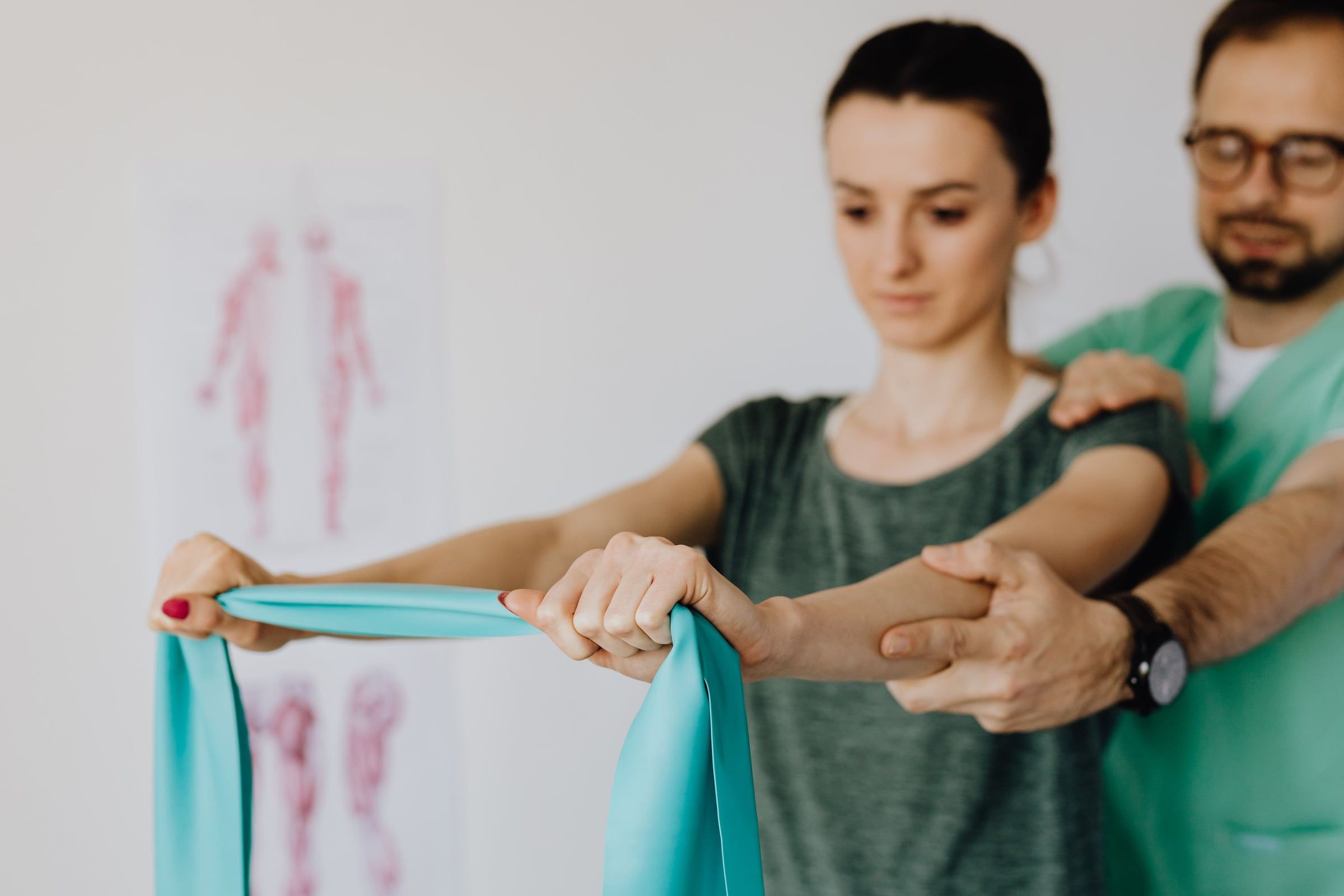
The short answer
For most strains, sprains, tendon pain and back pain, don't stop training altogether. Keep working everything that doesn't hurt, and load the injured area early, gently and progressively. Pain up to about 5 out of 10 during exercise is generally acceptable if it settles by the next morning. Total rest has a cost: 5 days in a leg cast cut strength by 9% in young men. Red flags, such as being unable to bear weight, need a professional first.
What we know, and how well
Starting progressive exercise within days of an ankle sprain or a muscle strain leads to a faster recovery than resting first.
Rehab exercise that is allowed to hurt somewhat gives results at least as good as exercise kept strictly pain-free.
Exercise therapy reduces chronic low back pain by about 15 points on a 0 to 100 scale compared with no treatment, usual care or placebo.
Exercise is a core, first-line treatment for knee osteoarthritis in international guidelines.
Strength training one limb increases the strength of the opposite, untrained limb by about 12% on average.
Light-load training with blood flow restriction builds more strength than light-load training alone in people with musculoskeletal conditions, though the certainty of the evidence is low.
Contents
- Should you train with an injury?
- What should you do in the first few days after an injury?
- How soon should you start loading a pulled muscle?
- Does pain mean you are doing damage?
- How much pain is OK when you train with an injury?
- Why does loading help injured tissue heal?
- How do you keep training the rest of your body?
- Is blood flow restriction training useful in rehab?
- Does the acute:chronic workload ratio predict injuries?
- When can you lift again after an injury?
- When should you see a professional?
- Questions people ask
- References
Should you train with an injury?
Usually, yes: for most strains, sprains, tendon problems and back pain, staying active and loading the injured area in a controlled way leads to a better recovery than stopping everything, as long as there are no red flags. The approach is called relative rest. You cut back on or change whatever aggravates the injury, and you keep training everything else.
People tend to go wrong in one of two directions. Some stop all training and wait for the pain to disappear. Others ignore it, keep lifting as normal and turn a minor problem into a long one. The research supports neither.
Complete rest has a cost, and it arrives quickly. In healthy young men whose leg was held in a cast, 5 days of immobilization shrank the quadriceps by 3.5% and cut leg strength by 9%; after 14 days, strength was down 23%1. In 11 healthy adults with an average age of 67, 10 days of bed rest cut knee extensor strength by 13%, stair-climbing power by 14% and aerobic capacity by 12%2. If you are older, that makes staying active while you recover more important, not less.
9%
Leg strength lost after 5 days with one leg in a cast, in healthy young men1.
13%
Knee extensor strength lost after 10 days of bed rest in healthy adults averaging 67 years2.
5/10
Pain allowed during or just after exercise in the pain-monitoring model, if it settles by the next morning3.
Pushing through has a cost too. Pain is an imperfect damage meter, but sharp pain, swelling and loss of function in the first days after an injury deserve respect. The middle path has four parts: protect the injury briefly, start loading it early and gently, keep the rest of your body strong, and let your symptoms set the dose. Our Rehab & Injury hub has guides for specific joints and tendons.
What should you do in the first few days after an injury?
Protect the injured area briefly, then start moving and loading it as pain allows; the old advice to rest and ice is giving way to approaches that put early, gradual loading at the center. For decades the standard was RICE (rest, ice, compression, elevation). The best-known replacement is PEACE & LOVE, proposed in 2020 in an editorial in the British Journal of Sports Medicine4. It keeps compression and elevation, drops rest and ice, and adds protection, education, loading and exercise5.
| Letter | Stands for | In practice |
|---|---|---|
| P | Protection | Limit loading for a short time so the injury can settle |
| E | Elevation | Raise the injured limb to help limit swelling |
| A | Avoid anti-inflammatories | Think twice about anti-inflammatory drugs (see below) |
| C | Compression | Use a bandage, tape or sleeve to limit swelling |
| E | Education | Learn what the injury is, and favor active recovery over passive treatments |
| L | Load | Return to normal activity gradually, guided by symptoms |
| O | Optimism | Expect to recover; confidence is part of rehab |
| V | Vascularization | Keep blood flowing and fitness up with cardio that doesn’t hurt |
| E | Exercise | Rebuild mobility, strength and balance with an active program |
Grade it honestly: PEACE & LOVE is expert opinion, a sensible summary rather than a package tested in trials. The first randomized trial we found compared it with PRICE plus anti-inflammatory drugs in 76 adolescents with a first ankle sprain, 65 of whom completed follow-up. Over 12 to 15 weeks, both groups recovered strength and balance at the same rate5. On those measures, the newer approach was no worse and no better.
The best-supported part is the L, early loading. In a trial of 101 people with mild or moderate ankle sprains, those who started therapeutic exercise in the first week had better ankle function at weeks 1 and 2 than those given standard protection, rest, ice, compression and elevation, and they were more active. Pain, swelling and reinjury (4% in each group) did not differ6. A Dutch clinical guideline concluded that people with an ankle ligament injury do best with tape or a brace plus an exercise program, and that supervised exercise is preferable to passive treatments7.
Should you ice an injury?
Ice can ease pain for a while, but there is little good evidence that it speeds healing, and animal studies disagree about whether it helps or slows repair. A systematic review of 22 trials rated their average quality at 3.4 out of 10. It found only marginal evidence that ice plus exercise helped after ankle sprains and surgery, and no evidence for a best method or duration8. Not every expert has dropped it: a review for family physicians still advises icing an ankle sprain for the first 3 to 7 days9.
Rat studies point both ways. Ice applied soon after a crush injury delayed muscle regeneration and left more collagen, the raw material of scar tissue10. After a milder injury, frequent icing sped regeneration11. These are animal studies, and the severity of the injury may change the answer. A fair reading: if ice dulls the pain enough to help you move, brief use is reasonable. Don’t expect it to heal anything.
Do anti-inflammatory painkillers slow healing?
They might, and for the pain of a sprain or strain they work no better than acetaminophen (paracetamol), so they no longer need to be the automatic first choice. A Cochrane review of 20 trials and 3,305 people with acute sprains, strains and bruises found no difference in pain between anti-inflammatory drugs (NSAIDs) and acetaminophen at 1 to 2 hours or at days 1 to 3, with high-certainty evidence. NSAIDs may slightly increase stomach and gut side effects, and the results should not be applied to people over 65, who were barely studied12.
The Dutch ankle guideline says NSAIDs can reduce pain and swelling but may suppress the natural healing process, so they should be used with care7. In people with heart disease or frailty, osteoarthritis guidelines advise against any oral NSAID13. If you need pain relief, ask a pharmacist or doctor which option suits you, especially if you are older, take blood thinners or have heart, kidney or stomach problems.
How soon should you start loading a pulled muscle?
Within days rather than weeks: in randomized trials, starting rehab early after a muscle strain sped recovery, and the type of loading mattered as well. In 50 recreational athletes with severe thigh or calf strains, starting rehab early sped recovery compared with delaying it, even though strength and MRI measures of healing ended up the same in both groups14. Waiting did not buy better-healed muscle. The same trial still saw signs of tissue repair on MRI 6 months after the injury, a reminder that healing continues for months.
Exercise choice matters. In 75 elite Swedish footballers with MRI-confirmed hamstring injuries, a program built on lengthening exercises, which load the hamstrings as they stretch, returned players to full training in 28 days on average, against 51 days for conventional exercises15.
The exercises do not have to be pain-free either. In 43 men with acute hamstring strains, rehab that was allowed to reach a pain threshold returned them to play as quickly as strictly pain-free rehab (median 17 vs 15 days, not a significant difference). It also restored 15% more knee flexor strength by the time they were cleared, and their muscle fascicles (bundles of fibers) had lengthened more by 2 months. Reinjuries were few and similar in the two groups16.
Backs follow the same logic. For acute low back pain, advice to stay active brought slightly better pain relief and function than advice to rest in bed17. Most acute back pain eases a lot on its own: in a meta-analysis of 33 cohorts with 11,166 people, average pain in those with acute back pain fell from 52 to 23 out of 100 in the first 6 weeks18.
Does pain mean you are doing damage?
Not necessarily: pain is real and useful, but it is not a damage meter, and how much something hurts often reflects tissue harm poorly. The International Association for the Study of Pain, which sets the definition researchers and clinicians use, revised it in 2020. Its notes say that pain is always a personal experience shaped by biological, psychological and social factors; that pain and nociception (the nerve signals from tissue) are different things; and that pain cannot be inferred from sensory nerve activity alone. Pain usually serves a protective purpose19.
Scans show how loose the link can be. Among people with no back pain, imaging finds disc degeneration in 37% of 20-year-olds and 96% of 80-year-olds, and disc bulges in 30% and 84%20. In knees with no pain and no history of injury, MRI shows cartilage defects in 11% of adults under 40 and 43% of those 40 and over, and meniscal tears in 4% and 19%21. A finding on a scan is not automatically the cause of your pain.
That doesn’t mean ignoring pain. In the first days after an acute injury, it protects healing tissue. Later in rehab, the goal is not zero pain but pain that stays within limits and settles. A meta-analysis of 7 trials in 385 people with chronic musculoskeletal pain found that exercise allowed to be painful gave a small extra short-term drop in pain compared with pain-free exercise, and no difference later. The authors concluded that pain during therapeutic exercise need not be a barrier to good results22.
How much pain is OK when you train with an injury?
A rule from tendon research allows pain up to 5 on a 0 to 10 scale during or just after exercise, as long as it is back to its usual level by the next morning. This is the pain-monitoring model. It was first described for pain around the kneecap (patellofemoral pain) and later adapted for Achilles tendon pain3.
Here is the model as a training tool. The thresholds come from the research; the last column is how we would apply them.
| What you notice | What it means | Next session |
|---|---|---|
| Pain at or below 5/10 during or just after exercise, back to its usual level by the next morning | The load is acceptable | Keep going, and progress load, range or volume gradually |
| Pain above 5/10 during or just after exercise | Too much for now | Reduce load, range, speed or volume |
| Pain or stiffness worse the next morning than it usually is | The tissue did not tolerate the dose | Drop back to the last level that settled |
| Sharp or sudden pain, a pop, new swelling, giving way, numbness | Not a dosing question | Stop and get it assessed |
The rule has limits. It comes from research on tendon and kneecap pain, and it is not meant for fractures, dislocations, the first days after an acute injury, or recovery from surgery, where your surgeon’s or physical therapist’s protocol comes first. Stop a set, and rethink the exercise, if pain turns sharp, climbs with every rep, or makes you change how you move.
Why does loading help injured tissue heal?
Tissues adapt to the loads placed on them, so carefully progressed loading is how an injured tendon, muscle or joint regains the capacity it lost; rest alone does not rebuild it.
Tendons
Tendons respond to heavy loading. In a meta-analysis of 27 studies in healthy adults, training made tendons stiffer (standardized mean difference 0.70), and the size of the change depended on how heavy the loading was, not on the type of muscle contraction24.
For painful tendons, loading programs are the usual starting point. In 58 people with long-standing Achilles tendinopathy, 12 weeks of heavy slow resistance training worked as well as the classic eccentric (lowering-only) program, and the gains held at 1 year. People stuck with heavy slow resistance better, attending 92% of sessions against 78%25. A network meta-analysis of 29 trials found that every active treatment for Achilles tendinopathy seemed to beat wait-and-see at 3 months, with no clear winner among them. Because exercise is cheap and low risk, the authors suggested starting with a calf-muscle exercise program26. Most of those trials were at high risk of bias, so treat the rankings loosely.
Low back pain
Exercise is one of the best-supported treatments for persistent back pain. A Cochrane review of 249 trials found moderate-certainty evidence that exercise reduced chronic low back pain by about 15 points on a 0 to 100 scale compared with no treatment, usual care or placebo, a difference the authors judged clinically important. The gain in day-to-day function, about 7 points, fell short of their threshold for importance. Side effects were mostly minor, such as muscle soreness27.
Knee pain and osteoarthritis
For knee osteoarthritis, exercise is a core, first-line treatment. Guidelines from the Osteoarthritis Research Society International list education and structured exercise, with or without weight management, as core treatments13. A 2024 Cochrane review of 139 trials and 12,468 people found that exercise improved pain and function by about 13 points out of 100 compared with no treatment or usual care. The authors called the size of the benefit of uncertain clinical importance, and noted that most participants knew which treatment they were getting28. If you are over 60 and your knees ache, our guide to strength training after 60 covers how to start and progress.
How do you keep training the rest of your body?
Train everything the injury allows: the other limbs, the other side of the body, and any movement that stays within the pain limits, because strength and fitness fade quickly when you stop and are cheap to maintain. A review of maintenance studies found that, in younger people, strength and muscle size held for up to 32 weeks on as little as 1 strength session a week of 1 set per exercise, as long as the loads stayed heavy relative to their strength. Older adults may need 2 sessions a week and 2 to 3 sets. Endurance held for up to 15 weeks with as few as 2 sessions a week, if the intensity was kept up29.
These are common ways to train around an injury, not a prescription. A physical therapist can tailor them to you.
| Injured area | Usually still trainable | Modify or pause for now |
|---|---|---|
| Ankle sprain | Upper body, core, the other leg, seated leg work, cycling once comfortable | Running, jumping and heavy standing lifts until walking is easy |
| Hamstring strain | Upper body, the other leg, quads and calves, then hamstring loading within the pain limits | Sprinting and heavy hip hinges until late in rehab |
| Low back pain | Walking, supported upper-body work, lifts that stay within the pain limits | Whatever reliably flares it, often heavy spinal loading at first |
| Shoulder pain | Lower body, core, the other arm, pain-free pulling and pressing ranges | Overhead pressing and deep bench pressing while it is irritable |
| Knee pain | Upper body, hip work, cycling, squats or step-ups to a pain-limited depth | Deep loaded bending and jumping if they flare it |
| Wrist or hand in a cast | Everything else, including strength work for the other arm | The injured side until your clinician clears it |
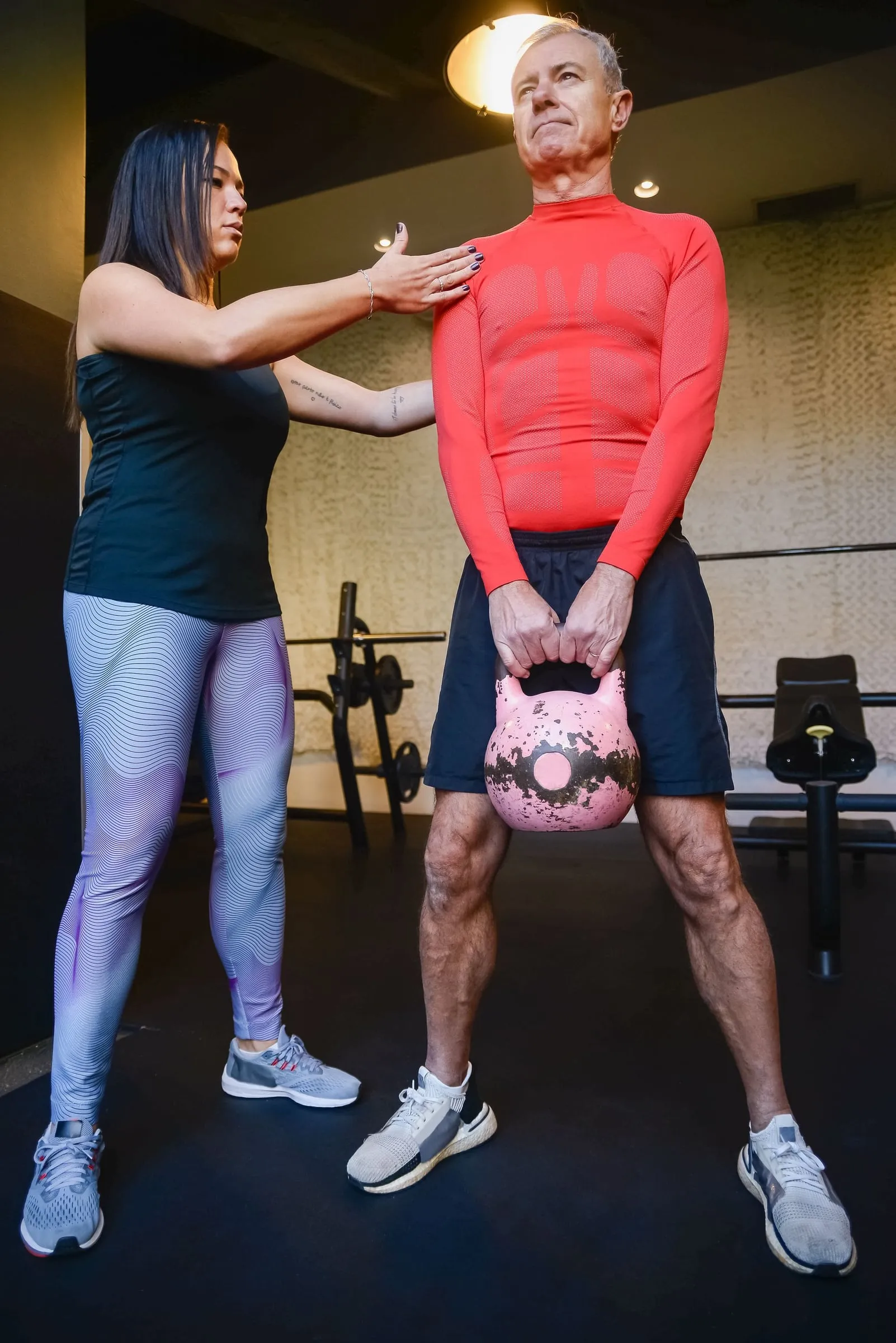
If you are new to lifting, or coming back after a long layoff, start with our guide on how to start strength training. Rearranging a week of training around a limitation is fiddly, and apps handle it with very different levels of skill; our app comparisons look at how each one deals with injuries. If you are tempted to ask a chatbot instead, read how to use ChatGPT to plan training safely first.
Does training the healthy side help the injured one?
Yes, modestly: training one limb raises strength in the untrained opposite limb, an effect called cross-education, and it can limit the strength lost while an injured limb is immobilized. A meta-analysis of 31 trials and 785 people found that training one limb increased the strength of the other by 11.9% on average: 9.4% in the arms and 16.4% in the legs. Eccentric (lowering) training gave the biggest effect, 17.7%. Many of the trials were at high risk of bias30. In healthy volunteers with an arm immobilized for 3 to 4 weeks, training the free arm could prevent the roughly 13% loss of strength and 4% loss of muscle size that would otherwise be expected31.
The effect also shows up after surgery. In 48 people recovering from ACL reconstruction, those who added 8 weeks of training for the healthy knee, starting 4 weeks after surgery, had stronger quadriceps in both legs than controls, with strength gains 28% to 31% greater. Knee function scores and hop distances did not differ33. Cross-education does not replace rehab of the injured side, but it costs little and can start on day one.
Is blood flow restriction training useful in rehab?
It can be: light weights lifted with a cuff that partly restricts blood flow build more strength than light weights alone, which helps when an injury rules out heavy lifting. A 2017 meta-analysis of 20 rehab studies, covering knee surgery, knee osteoarthritis and older adults at risk of muscle loss, found a moderate strength benefit over light-load training alone, though less than with heavy training34. A larger 2026 meta-analysis of 45 randomized trials in 1,652 people with musculoskeletal conditions found low-certainty evidence that it beat light-load training for strength and disability, and moderate-certainty evidence of no clear difference from heavy-load training for strength. Its effect on pain was small35.
A position stand describes typical protocols: 20% to 40% of one-repetition maximum, a cuff pressure of 40% to 80% of the pressure that fully stops arterial blood flow, and sets of 30, 15, 15 and 15 repetitions with 30 to 60 seconds of rest, 2 to 3 times a week36.
The safety caveats are real. In trials, low-certainty evidence suggested side effects were no more common than with ordinary exercise, but they were reported inconsistently35. Rhabdomyolysis, a serious breakdown of muscle, has been reported in isolated cases; the estimated rate is very low and not clearly higher than with ordinary exercise36. Because the cuff compresses veins, the position stand also discusses blood clot risk factors, including a previous clot, recent major orthopedic surgery, fractures, cancer, pregnancy, oral contraceptives and obesity36. If any apply to you, talk to your doctor first, and learn the technique from a clinician who sets the cuff pressure properly.
Does the acute:chronic workload ratio predict injuries?
Not reliably: the ratio of this week’s training load to the past month’s became a popular injury predictor, but later analyses found it adds statistical noise and has no established causal link to injury. The idea came from team sports. An influential 2016 review argued that fitness built by hard training protects athletes, that rapid spikes in load likely explain a large share of soft-tissue injuries, and that a ratio between 0.8 and 1.3 was a “sweet spot”, with 1.5 or more a “danger zone”37.
Later work took the ratio apart. A 2020 analysis concluded that there is no evidence supporting its use to reduce injury risk: no study has properly estimated a causal effect, ratios like this create statistical artifacts, and the metric is not consistently related to injury38. What survives is the plain advice under the math. Avoid sudden large jumps in training, build up gradually, and while an area is recovering, let the next-morning check guide you more than any formula.
When can you lift again after an injury?
When you meet criteria rather than when a date arrives: return to training works best as a series of stages, each started only when the injured area handles the previous one without flaring up. An international consensus on return to sport describes it as a continuum that runs alongside rehabilitation, not a single yes-or-no decision at the end, and notes that research to guide the decisions is scarce39.
The best data come from knee ligament surgery. In 106 athletes in pivoting sports followed for 2 years after ACL reconstruction, the reinjury rate fell by 51% for each month their return was delayed, up to 9 months after surgery. More even quadriceps strength between the legs before returning also lowered reinjury. Of those who failed a set of strength, hop and function tests, 38.2% were reinjured, against 5.6% of those who passed, although that comparison fell short of statistical significance40.
The table below is a general guide, not a protocol. Time in each stage ranges from days for a mild strain to months after surgery.
| Stage | Main aim | Move on when |
|---|---|---|
| 1. Settle | Protect the injury, move it gently, keep training the rest of the body | Pain at rest is easing and you can move the area through part of its range |
| 2. Load | Start direct exercise for the injured area at light loads, within the pain limits | Daily activities are comfortable and pain after sessions settles by the next morning |
| 3. Strengthen | Progress to heavier, slower strength work for the injured area | Strength is close to the other side’s, for example at least 90% of it40, without flare-ups |
| 4. Speed and skill | Reintroduce running, jumping, sport drills or your usual lifts at reduced load | These cause no next-day flare-ups |
| 5. Full training | Return to normal programming | You train fully without symptoms building from week to week |
Once you are back, keep the strength work. In a meta-analysis of 25 trials with 26,610 participants, strength training cut sports injuries to less than a third, while stretching had no measurable effect41. Rebuilding the muscle you lost follows the same principles that built it in the first place; see how muscles grow.
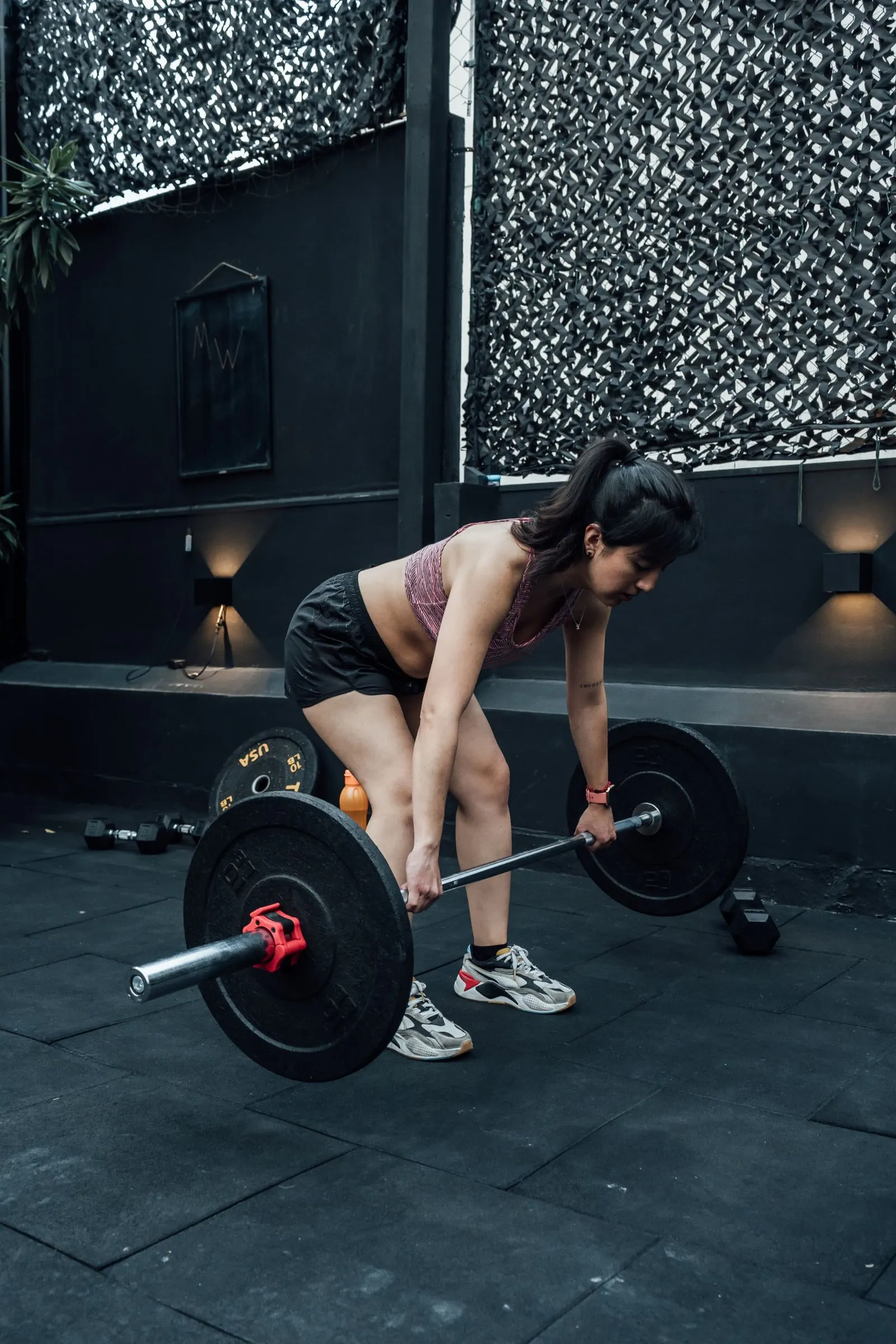
When should you see a professional?
See a doctor or physical therapist promptly if you have any of the red flags below, if you are unsure what you have injured, or if things are getting worse or have not clearly improved after a few weeks of sensible changes.
You do not need a red flag to ask for help: a physical therapist or sports physician can tell you what to load, how much and when to progress.
Questions people ask
- Should I train with an injury?
- Usually, yes, with changes. For most strains, sprains, tendon pain and back pain, keeping the rest of your body training and loading the injured area gently and progressively leads to a better recovery than complete rest. The exceptions are red flags such as a suspected fracture, a joint that swells within hours, numbness or weakness, or chest pain: get those assessed before you train.
- Is it better to rest or exercise an injury?
- Both, in sequence. A short period of protection in the first days makes sense after an acute injury, but long rest costs strength quickly: 5 days of leg immobilization cut strength by 9% in young men, and 10 days of bed rest cut leg strength by 13% in healthy older adults. After the first days, controlled exercise usually beats rest.
- Can I exercise with a pulled muscle?
- Yes, after the first few days, and the injured muscle itself should usually be part of it. In trials, starting rehab early after a thigh or calf strain sped recovery, and hamstring rehab that allowed some pain restored strength better than pain-free rehab without slowing return to play. Save sprinting and maximal efforts for the final stage, and get a large or severe strain assessed.
- How much pain is OK when exercising with an injury?
- A rule used in tendon rehab allows pain up to 5 on a 0 to 10 scale during or just after exercise, as long as it returns to its usual level by the next morning. If it climbs higher, or you are stiffer and sorer the next day, reduce the load. Sharp pain, a pop, new swelling or a joint giving way means stop.
- Should I ice an injury?
- Ice can ease pain for a short time, which may help you move. But trials of ice are few and low in quality, there is little evidence that it speeds healing, and rat studies disagree about whether it helps or slows muscle repair. Newer frameworks such as PEACE & LOVE leave it out. If it eases your pain, brief use is reasonable.
- Do anti-inflammatories like ibuprofen slow healing?
- They might. A Dutch guideline warns that they may suppress natural healing, and for the pain of a sprain or strain they worked no better than acetaminophen (paracetamol) in a Cochrane review of 20 trials, with slightly more stomach side effects. Older adults and people with heart, kidney or stomach problems should ask a doctor or pharmacist before taking them.
- When can I lift again after an injury?
- When you meet criteria, not just when a date arrives. Move to the next stage when the current one causes no next-day flare-up, and go back to heavy or fast lifting when the injured side has close to the other side's strength, for example at least 90%. After ACL reconstruction, waiting at least 9 months and restoring quadriceps symmetry both cut reinjury rates.
- If the pain is gone, is the injury healed?
- Not necessarily. Tissue keeps remodeling for months: in one trial of severe thigh and calf strains, MRI still showed signs of repair 6 months after the injury. Before going straight back to your old weights, rebuild strength to near the other side's level and bring back heavy and fast work gradually, watching for next-day flare-ups.
References
- 1SourceWall BT, Dirks ML, Snijders T, Senden JM, Dolmans J, van Loon LJ (2014). Substantial skeletal muscle loss occurs during only 5 days of disuse. Acta Physiologica, 210(3), 600-611 Experimental study without a control group, 5 or 14 days of one-leg immobilization in 24 healthy young men.DOIPubMedWall BT, Dirks ML, Snijders T, Senden JM, Dolmans J, van Loon LJ. Substantial skeletal muscle loss occurs during only 5 days of disuse. Acta Physiologica. 2014;210(3):600-611. doi:10.1111/apha.12190 PMID: 24168489
- 2SourceKortebein P, Symons TB, Ferrando A, Paddon-Jones D, Ronsen O, Protas E, et al. (2008). Functional impact of 10 days of bed rest in healthy older adults. The Journals of Gerontology, Series A: Biological Sciences and Medical Sciences, 63(10), 1076-1081 Experimental study without a control group, 10 days of bed rest in 11 healthy older adults.DOIPubMedKortebein P, Symons TB, Ferrando A, Paddon-Jones D, Ronsen O, Protas E, et al.. Functional impact of 10 days of bed rest in healthy older adults. The Journals of Gerontology, Series A: Biological Sciences and Medical Sciences. 2008;63(10):1076-1081. doi:10.1093/gerona/63.10.1076 PMID: 18948558
- 3Randomized trialSprague AL, Couppé C, Pohlig RT, Snyder-Mackler L, Silbernagel KG (2021). Pain-guided activity modification during treatment for patellar tendinopathy: a feasibility and pilot randomized clinical trial. Pilot and Feasibility Studies, 7(1), 58 Pilot trial, cited for its description of the pain-monitoring model (full text, PMC7905015).DOIPubMedSprague AL, Couppé C, Pohlig RT, Snyder-Mackler L, Silbernagel KG. Pain-guided activity modification during treatment for patellar tendinopathy: a feasibility and pilot randomized clinical trial. Pilot and Feasibility Studies. 2021;7(1):58. doi:10.1186/s40814-021-00792-5 PMID: 33632313
- 4SourceDubois B, Esculier JF (2020). Soft-tissue injuries simply need PEACE and LOVE. British Journal of Sports Medicine, 54(2), 72-73 Editorial (expert opinion).DOIPubMedDubois B, Esculier JF. Soft-tissue injuries simply need PEACE and LOVE. British Journal of Sports Medicine. 2020;54(2):72-73. doi:10.1136/bjsports-2019-101253 PMID: 31377722
- 5Randomized trialMeškauskas M, Rutkauskas S, Misiūnienė M, Žumbakys J, Tomkevičiūtė J, Malcius D, Čekanauskas E (2026). PRICE (Protection, Rest, Ice, Compression, Elevation) vs. PEACE and LOVE (Protection, Elevation, Avoid anti-inflammatories, Compression, Education and Load, Optimism, Vascularization, Exercise) in adolescent lateral ankle sprain rehabilitation: a randomized prospective comparative study of muscle strength and dynamic balance. BMC Sports Science, Medicine and Rehabilitation, 18(1), 213DOIPubMedMeškauskas M, Rutkauskas S, Misiūnienė M, Žumbakys J, Tomkevičiūtė J, Malcius D, Čekanauskas E. PRICE (Protection, Rest, Ice, Compression, Elevation) vs. PEACE and LOVE (Protection, Elevation, Avoid anti-inflammatories, Compression, Education and Load, Optimism, Vascularization, Exercise) in adolescent lateral ankle sprain rehabilitation: a randomized prospective comparative study of muscle strength and dynamic balance. BMC Sports Science, Medicine and Rehabilitation. 2026;18(1):213. doi:10.1186/s13102-026-01651-7 PMID: 41840451
- 6Randomized trialBleakley CM, O'Connor SR, Tully MA, Rocke LG, Macauley DC, Bradbury I, Keegan S, McDonough SM (2010). Effect of accelerated rehabilitation on function after ankle sprain: randomised controlled trial. BMJ, 340, c1964DOIPubMedBleakley CM, O'Connor SR, Tully MA, Rocke LG, Macauley DC, Bradbury I, Keegan S, McDonough SM. Effect of accelerated rehabilitation on function after ankle sprain: randomised controlled trial. BMJ. 2010;340:c1964. doi:10.1136/bmj.c1964 PMID: 20457737
- 7GuidelineVuurberg G, Hoorntje A, Wink LM, van der Doelen BFW, van den Bekerom MP, Dekker R, et al. (2018). Diagnosis, treatment and prevention of ankle sprains: update of an evidence-based clinical guideline. British Journal of Sports Medicine, 52(15), 956DOIPubMedVuurberg G, Hoorntje A, Wink LM, van der Doelen BFW, van den Bekerom MP, Dekker R, et al.. Diagnosis, treatment and prevention of ankle sprains: update of an evidence-based clinical guideline. British Journal of Sports Medicine. 2018;52(15):956. doi:10.1136/bjsports-2017-098106 PMID: 29514819
- 8Systematic reviewBleakley C, McDonough S, MacAuley D (2004). The use of ice in the treatment of acute soft-tissue injury: a systematic review of randomized controlled trials. The American Journal of Sports Medicine, 32(1), 251-261DOIPubMedBleakley C, McDonough S, MacAuley D. The use of ice in the treatment of acute soft-tissue injury: a systematic review of randomized controlled trials. The American Journal of Sports Medicine. 2004;32(1):251-261. doi:10.1177/0363546503260757 PMID: 14754753
- 9Narrative reviewTiemstra JD (2012). Update on acute ankle sprains. American Family Physician, 85(12), 1170-1176PubMedTiemstra JD. Update on acute ankle sprains. American Family Physician. 2012;85(12):1170-1176. PMID: 22962897
- 10Animal studyTakagi R, Fujita N, Arakawa T, Kawada S, Ishii N, Miki A (2011). Influence of icing on muscle regeneration after crush injury to skeletal muscles in rats. Journal of Applied Physiology, 110(2), 382-388DOIPubMedTakagi R, Fujita N, Arakawa T, Kawada S, Ishii N, Miki A. Influence of icing on muscle regeneration after crush injury to skeletal muscles in rats. Journal of Applied Physiology. 2011;110(2):382-388. doi:10.1152/japplphysiol.01187.2010 PMID: 21164157
- 11Animal studyKawashima M, Nagata I, Terada E, Tamari A, Kurauchi M, Sakuraya T, et al. (2024). Frequent Icing Stimulates Skeletal Muscle Regeneration Following Injury With Necrosis in a Small Fraction of Myofibers in Rats. Journal of Histochemistry & Cytochemistry, 72(8-9), 569-584DOIPubMedKawashima M, Nagata I, Terada E, Tamari A, Kurauchi M, Sakuraya T, et al.. Frequent Icing Stimulates Skeletal Muscle Regeneration Following Injury With Necrosis in a Small Fraction of Myofibers in Rats. Journal of Histochemistry & Cytochemistry. 2024;72(8-9):569-584. doi:10.1369/00221554241274882 PMID: 39240248
- 12Meta-analysisJones P, Lamdin R, Dalziel SR (2020). Oral non-steroidal anti-inflammatory drugs versus other oral analgesic agents for acute soft tissue injury. Cochrane Database of Systematic Reviews, 8(8), CD007789DOIPubMedJones P, Lamdin R, Dalziel SR. Oral non-steroidal anti-inflammatory drugs versus other oral analgesic agents for acute soft tissue injury. Cochrane Database of Systematic Reviews. 2020;8(8):CD007789. doi:10.1002/14651858.CD007789.pub3 PMID: 32797734
- 13GuidelineBannuru RR, Osani MC, Vaysbrot EE, Arden NK, Bennell K, Bierma-Zeinstra SMA, et al. (2019). OARSI guidelines for the non-surgical management of knee, hip, and polyarticular osteoarthritis. Osteoarthritis and Cartilage, 27(11), 1578-1589DOIPubMedBannuru RR, Osani MC, Vaysbrot EE, Arden NK, Bennell K, Bierma-Zeinstra SMA, et al.. OARSI guidelines for the non-surgical management of knee, hip, and polyarticular osteoarthritis. Osteoarthritis and Cartilage. 2019;27(11):1578-1589. doi:10.1016/j.joca.2019.06.011 PMID: 31278997
- 14Randomized trialBayer ML, Hoegberget-Kalisz M, Jensen MH, Olesen JL, Svensson RB, Couppé C, et al. (2018). Role of tissue perfusion, muscle strength recovery, and pain in rehabilitation after acute muscle strain injury: A randomized controlled trial comparing early and delayed rehabilitation. Scandinavian Journal of Medicine & Science in Sports, 28(12), 2579-2591DOIPubMedBayer ML, Hoegberget-Kalisz M, Jensen MH, Olesen JL, Svensson RB, Couppé C, et al.. Role of tissue perfusion, muscle strength recovery, and pain in rehabilitation after acute muscle strain injury: A randomized controlled trial comparing early and delayed rehabilitation. Scandinavian Journal of Medicine & Science in Sports. 2018;28(12):2579-2591. doi:10.1111/sms.13269 PMID: 30043997
- 15Randomized trialAskling CM, Tengvar M, Thorstensson A (2013). Acute hamstring injuries in Swedish elite football: a prospective randomised controlled clinical trial comparing two rehabilitation protocols. British Journal of Sports Medicine, 47(15), 953-959DOIPubMedAskling CM, Tengvar M, Thorstensson A. Acute hamstring injuries in Swedish elite football: a prospective randomised controlled clinical trial comparing two rehabilitation protocols. British Journal of Sports Medicine. 2013;47(15):953-959. doi:10.1136/bjsports-2013-092165 PMID: 23536466
- 16Randomized trialHickey JT, Timmins RG, Maniar N, Rio E, Hickey PF, Pitcher CA, Williams MD, Opar DA (2020). Pain-Free Versus Pain-Threshold Rehabilitation Following Acute Hamstring Strain Injury: A Randomized Controlled Trial. Journal of Orthopaedic & Sports Physical Therapy, 50(2), 91-103DOIPubMedHickey JT, Timmins RG, Maniar N, Rio E, Hickey PF, Pitcher CA, Williams MD, Opar DA. Pain-Free Versus Pain-Threshold Rehabilitation Following Acute Hamstring Strain Injury: A Randomized Controlled Trial. Journal of Orthopaedic & Sports Physical Therapy. 2020;50(2):91-103. doi:10.2519/jospt.2020.8895 PMID: 32005093
- 17Systematic reviewDahm KT, Brurberg KG, Jamtvedt G, Hagen KB (2010). Advice to rest in bed versus advice to stay active for acute low-back pain and sciatica. Cochrane Database of Systematic Reviews, 2010(6), CD007612DOIPubMedDahm KT, Brurberg KG, Jamtvedt G, Hagen KB. Advice to rest in bed versus advice to stay active for acute low-back pain and sciatica. Cochrane Database of Systematic Reviews. 2010;2010(6):CD007612. doi:10.1002/14651858.CD007612.pub2 PMID: 20556780
- 18Meta-analysisda C Menezes Costa L, Maher CG, Hancock MJ, McAuley JH, Herbert RD, Costa LO (2012). The prognosis of acute and persistent low-back pain: a meta-analysis. CMAJ, 184(11), E613-E624DOIPubMedda C Menezes Costa L, Maher CG, Hancock MJ, McAuley JH, Herbert RD, Costa LO. The prognosis of acute and persistent low-back pain: a meta-analysis. CMAJ. 2012;184(11):E613-E624. doi:10.1503/cmaj.111271 PMID: 22586331
- 19Consensus statementRaja SN, Carr DB, Cohen M, Finnerup NB, Flor H, Gibson S, et al. (2020). The revised International Association for the Study of Pain definition of pain: concepts, challenges, and compromises. Pain, 161(9), 1976-1982DOIPubMedRaja SN, Carr DB, Cohen M, Finnerup NB, Flor H, Gibson S, et al.. The revised International Association for the Study of Pain definition of pain: concepts, challenges, and compromises. Pain. 2020;161(9):1976-1982. doi:10.1097/j.pain.0000000000001939 PMID: 32694387
- 20Systematic reviewBrinjikji W, Luetmer PH, Comstock B, Bresnahan BW, Chen LE, Deyo RA, et al. (2015). Systematic literature review of imaging features of spinal degeneration in asymptomatic populations. American Journal of Neuroradiology, 36(4), 811-816DOIPubMedBrinjikji W, Luetmer PH, Comstock B, Bresnahan BW, Chen LE, Deyo RA, et al.. Systematic literature review of imaging features of spinal degeneration in asymptomatic populations. American Journal of Neuroradiology. 2015;36(4):811-816. doi:10.3174/ajnr.A4173 PMID: 25430861
- 21Meta-analysisCulvenor AG, Øiestad BE, Hart HF, Stefanik JJ, Guermazi A, Crossley KM (2019). Prevalence of knee osteoarthritis features on magnetic resonance imaging in asymptomatic uninjured adults: a systematic review and meta-analysis. British Journal of Sports Medicine, 53(20), 1268-1278DOIPubMedCulvenor AG, Øiestad BE, Hart HF, Stefanik JJ, Guermazi A, Crossley KM. Prevalence of knee osteoarthritis features on magnetic resonance imaging in asymptomatic uninjured adults: a systematic review and meta-analysis. British Journal of Sports Medicine. 2019;53(20):1268-1278. doi:10.1136/bjsports-2018-099257 PMID: 29886437
- 22Meta-analysisSmith BE, Hendrick P, Smith TO, Bateman M, Moffatt F, Rathleff MS, Selfe J, Logan P (2017). Should exercises be painful in the management of chronic musculoskeletal pain? A systematic review and meta-analysis. British Journal of Sports Medicine, 51(23), 1679-1687DOIPubMedSmith BE, Hendrick P, Smith TO, Bateman M, Moffatt F, Rathleff MS, Selfe J, Logan P. Should exercises be painful in the management of chronic musculoskeletal pain? A systematic review and meta-analysis. British Journal of Sports Medicine. 2017;51(23):1679-1687. doi:10.1136/bjsports-2016-097383 PMID: 28596288
- 23Randomized trialSilbernagel KG, Thomeé R, Eriksson BI, Karlsson J (2007). Continued sports activity, using a pain-monitoring model, during rehabilitation in patients with Achilles tendinopathy: a randomized controlled study. The American Journal of Sports Medicine, 35(6), 897-906DOIPubMedSilbernagel KG, Thomeé R, Eriksson BI, Karlsson J. Continued sports activity, using a pain-monitoring model, during rehabilitation in patients with Achilles tendinopathy: a randomized controlled study. The American Journal of Sports Medicine. 2007;35(6):897-906. doi:10.1177/0363546506298279 PMID: 17307888
- 24Meta-analysisBohm S, Mersmann F, Arampatzis A (2015). Human tendon adaptation in response to mechanical loading: a systematic review and meta-analysis of exercise intervention studies on healthy adults. Sports Medicine - Open, 1(1), 7DOIPubMedBohm S, Mersmann F, Arampatzis A. Human tendon adaptation in response to mechanical loading: a systematic review and meta-analysis of exercise intervention studies on healthy adults. Sports Medicine - Open. 2015;1(1):7. doi:10.1186/s40798-015-0009-9 PMID: 27747846
- 25Randomized trialBeyer R, Kongsgaard M, Hougs Kjær B, Øhlenschlæger T, Kjær M, Magnusson SP (2015). Heavy Slow Resistance Versus Eccentric Training as Treatment for Achilles Tendinopathy: A Randomized Controlled Trial. The American Journal of Sports Medicine, 43(7), 1704-1711DOIPubMedBeyer R, Kongsgaard M, Hougs Kjær B, Øhlenschlæger T, Kjær M, Magnusson SP. Heavy Slow Resistance Versus Eccentric Training as Treatment for Achilles Tendinopathy: A Randomized Controlled Trial. The American Journal of Sports Medicine. 2015;43(7):1704-1711. doi:10.1177/0363546515584760 PMID: 26018970
- 26Meta-analysisvan der Vlist AC, Winters M, Weir A, Ardern CL, Welton NJ, Caldwell DM, Verhaar JAN, de Vos RJ (2021). Which treatment is most effective for patients with Achilles tendinopathy? A living systematic review with network meta-analysis of 29 randomised controlled trials. British Journal of Sports Medicine, 55(5), 249-256DOIPubMedvan der Vlist AC, Winters M, Weir A, Ardern CL, Welton NJ, Caldwell DM, Verhaar JAN, de Vos RJ. Which treatment is most effective for patients with Achilles tendinopathy? A living systematic review with network meta-analysis of 29 randomised controlled trials. British Journal of Sports Medicine. 2021;55(5):249-256. doi:10.1136/bjsports-2019-101872 PMID: 32522732
- 27Meta-analysisHayden JA, Ellis J, Ogilvie R, Malmivaara A, van Tulder MW (2021). Exercise therapy for chronic low back pain. Cochrane Database of Systematic Reviews, 9(9), CD009790DOIPubMedHayden JA, Ellis J, Ogilvie R, Malmivaara A, van Tulder MW. Exercise therapy for chronic low back pain. Cochrane Database of Systematic Reviews. 2021;9(9):CD009790. doi:10.1002/14651858.CD009790.pub2 PMID: 34580864
- 28Meta-analysisLawford BJ, Hall M, Hinman RS, Van der Esch M, Harmer AR, Spiers L, et al. (2024). Exercise for osteoarthritis of the knee. Cochrane Database of Systematic Reviews, 12(12), CD004376DOIPubMedLawford BJ, Hall M, Hinman RS, Van der Esch M, Harmer AR, Spiers L, et al.. Exercise for osteoarthritis of the knee. Cochrane Database of Systematic Reviews. 2024;12(12):CD004376. doi:10.1002/14651858.CD004376.pub4 PMID: 39625083
- 29Narrative reviewSpiering BA, Mujika I, Sharp MA, Foulis SA (2021). Maintaining Physical Performance: The Minimal Dose of Exercise Needed to Preserve Endurance and Strength Over Time. Journal of Strength and Conditioning Research, 35(5), 1449-1458DOIPubMedSpiering BA, Mujika I, Sharp MA, Foulis SA. Maintaining Physical Performance: The Minimal Dose of Exercise Needed to Preserve Endurance and Strength Over Time. Journal of Strength and Conditioning Research. 2021;35(5):1449-1458. doi:10.1519/JSC.0000000000003964 PMID: 33629972
- 30Meta-analysisManca A, Dragone D, Dvir Z, Deriu F (2017). Cross-education of muscular strength following unilateral resistance training: a meta-analysis. European Journal of Applied Physiology, 117(11), 2335-2354DOIPubMedManca A, Dragone D, Dvir Z, Deriu F. Cross-education of muscular strength following unilateral resistance training: a meta-analysis. European Journal of Applied Physiology. 2017;117(11):2335-2354. doi:10.1007/s00421-017-3720-z PMID: 28936703
- 31Narrative reviewAndrushko JW, Gould LA, Farthing JP (2018). Contralateral effects of unilateral training: sparing of muscle strength and size after immobilization. Applied Physiology, Nutrition, and Metabolism, 43(11), 1131-1139DOIPubMedAndrushko JW, Gould LA, Farthing JP. Contralateral effects of unilateral training: sparing of muscle strength and size after immobilization. Applied Physiology, Nutrition, and Metabolism. 2018;43(11):1131-1139. doi:10.1139/apnm-2018-0073 PMID: 29800529
- 32Randomized trialMagnus CR, Arnold CM, Johnston G, Dal-Bello Haas V, Basran J, Krentz JR, Farthing JP (2013). Cross-education for improving strength and mobility after distal radius fractures: a randomized controlled trial. Archives of Physical Medicine and Rehabilitation, 94(7), 1247-1255DOIPubMedMagnus CR, Arnold CM, Johnston G, Dal-Bello Haas V, Basran J, Krentz JR, Farthing JP. Cross-education for improving strength and mobility after distal radius fractures: a randomized controlled trial. Archives of Physical Medicine and Rehabilitation. 2013;94(7):1247-1255. doi:10.1016/j.apmr.2013.03.005 PMID: 23529145
- 33Randomized trialHarput G, Ulusoy B, Yildiz TI, Demirci S, Eraslan L, Turhan E, Tunay VB (2019). Cross-education improves quadriceps strength recovery after ACL reconstruction: a randomized controlled trial. Knee Surgery, Sports Traumatology, Arthroscopy, 27(1), 68-75DOIPubMedHarput G, Ulusoy B, Yildiz TI, Demirci S, Eraslan L, Turhan E, Tunay VB. Cross-education improves quadriceps strength recovery after ACL reconstruction: a randomized controlled trial. Knee Surgery, Sports Traumatology, Arthroscopy. 2019;27(1):68-75. doi:10.1007/s00167-018-5040-1 PMID: 29959448
- 34Meta-analysisHughes L, Paton B, Rosenblatt B, Gissane C, Patterson SD (2017). Blood flow restriction training in clinical musculoskeletal rehabilitation: a systematic review and meta-analysis. British Journal of Sports Medicine, 51(13), 1003-1011DOIPubMedHughes L, Paton B, Rosenblatt B, Gissane C, Patterson SD. Blood flow restriction training in clinical musculoskeletal rehabilitation: a systematic review and meta-analysis. British Journal of Sports Medicine. 2017;51(13):1003-1011. doi:10.1136/bjsports-2016-097071 PMID: 28259850
- 35Meta-analysisFerlito JV, Rolnick N, Kamiş O, de Queiros VS, Lopez P, Hughes L (2026). Do blood flow restriction exercises offer additional benefits when compared to conventional exercises in musculoskeletal rehabilitation? A systematic review and meta-analysis. British Journal of Sports Medicine, 60(18), 1421-1433DOIPubMedFerlito JV, Rolnick N, Kamiş O, de Queiros VS, Lopez P, Hughes L. Do blood flow restriction exercises offer additional benefits when compared to conventional exercises in musculoskeletal rehabilitation? A systematic review and meta-analysis. British Journal of Sports Medicine. 2026;60(18):1421-1433. doi:10.1136/bjsports-2025-111452 PMID: 42399091
- 36Position standPatterson SD, Hughes L, Warmington S, Burr J, Scott BR, Owens J, et al. (2019). Blood Flow Restriction Exercise: Considerations of Methodology, Application, and Safety. Frontiers in Physiology, 10, 533DOIPubMedPatterson SD, Hughes L, Warmington S, Burr J, Scott BR, Owens J, et al.. Blood Flow Restriction Exercise: Considerations of Methodology, Application, and Safety. Frontiers in Physiology. 2019;10:533. doi:10.3389/fphys.2019.00533 PMID: 31156448
- 37Narrative reviewGabbett TJ (2016). The training-injury prevention paradox: should athletes be training smarter and harder?. British Journal of Sports Medicine, 50(5), 273-280DOIPubMedGabbett TJ. The training-injury prevention paradox: should athletes be training smarter and harder?. British Journal of Sports Medicine. 2016;50(5):273-280. doi:10.1136/bjsports-2015-095788 PMID: 26758673
- 38Narrative reviewImpellizzeri FM, Tenan MS, Kempton T, Novak A, Coutts AJ (2020). Acute:Chronic Workload Ratio: Conceptual Issues and Fundamental Pitfalls. International Journal of Sports Physiology and Performance, 15(6), 907-913DOIPubMedImpellizzeri FM, Tenan MS, Kempton T, Novak A, Coutts AJ. Acute:Chronic Workload Ratio: Conceptual Issues and Fundamental Pitfalls. International Journal of Sports Physiology and Performance. 2020;15(6):907-913. doi:10.1123/ijspp.2019-0864 PMID: 32502973
- 39Consensus statementArdern CL, Glasgow P, Schneiders A, Witvrouw E, Clarsen B, Cools A, et al. (2016). 2016 Consensus statement on return to sport from the First World Congress in Sports Physical Therapy, Bern. British Journal of Sports Medicine, 50(14), 853-864DOIPubMedArdern CL, Glasgow P, Schneiders A, Witvrouw E, Clarsen B, Cools A, et al.. 2016 Consensus statement on return to sport from the First World Congress in Sports Physical Therapy, Bern. British Journal of Sports Medicine. 2016;50(14):853-864. doi:10.1136/bjsports-2016-096278 PMID: 27226389
- 40Cohort studyGrindem H, Snyder-Mackler L, Moksnes H, Engebretsen L, Risberg MA (2016). Simple decision rules can reduce reinjury risk by 84% after ACL reconstruction: the Delaware-Oslo ACL cohort study. British Journal of Sports Medicine, 50(13), 804-808DOIPubMedGrindem H, Snyder-Mackler L, Moksnes H, Engebretsen L, Risberg MA. Simple decision rules can reduce reinjury risk by 84% after ACL reconstruction: the Delaware-Oslo ACL cohort study. British Journal of Sports Medicine. 2016;50(13):804-808. doi:10.1136/bjsports-2016-096031 PMID: 27162233
- 41Meta-analysisLauersen JB, Bertelsen DM, Andersen LB (2014). The effectiveness of exercise interventions to prevent sports injuries: a systematic review and meta-analysis of randomised controlled trials. British Journal of Sports Medicine, 48(11), 871-877DOIPubMedLauersen JB, Bertelsen DM, Andersen LB. The effectiveness of exercise interventions to prevent sports injuries: a systematic review and meta-analysis of randomised controlled trials. British Journal of Sports Medicine. 2014;48(11):871-877. doi:10.1136/bjsports-2013-092538 PMID: 24100287
- 42Consensus statementRiebe D, Franklin BA, Thompson PD, Garber CE, Whitfield GP, Magal M, Pescatello LS (2015). Updating ACSM's Recommendations for Exercise Preparticipation Health Screening. Medicine & Science in Sports & Exercise, 47(11), 2473-2479DOIPubMedRiebe D, Franklin BA, Thompson PD, Garber CE, Whitfield GP, Magal M, Pescatello LS. Updating ACSM's Recommendations for Exercise Preparticipation Health Screening. Medicine & Science in Sports & Exercise. 2015;47(11):2473-2479. doi:10.1249/MSS.0000000000000664 PMID: 26473759
- 43Systematic reviewDionne N, Adefolarin A, Kunzelman D, Trehan N, Finucane L, Levesque L, Walton DM, Sadi J (2019). What is the diagnostic accuracy of red flags related to cauda equina syndrome (CES), when compared to Magnetic Resonance Imaging (MRI)? A systematic review. Musculoskeletal Science and Practice, 42, 125-133DOIPubMedDionne N, Adefolarin A, Kunzelman D, Trehan N, Finucane L, Levesque L, Walton DM, Sadi J. What is the diagnostic accuracy of red flags related to cauda equina syndrome (CES), when compared to Magnetic Resonance Imaging (MRI)? A systematic review. Musculoskeletal Science and Practice. 2019;42:125-133. doi:10.1016/j.msksp.2019.05.004 PMID: 31132655
- 44SourceMaffulli N, Binfield PM, King JB, Good CJ (1993). Acute haemarthrosis of the knee in athletes. A prospective study of 106 cases. The Journal of Bone and Joint Surgery, British Volume, 75(6), 945-949 Prospective case series of 106 male athletes.DOIPubMedMaffulli N, Binfield PM, King JB, Good CJ. Acute haemarthrosis of the knee in athletes. A prospective study of 106 cases. The Journal of Bone and Joint Surgery, British Volume. 1993;75(6):945-949. doi:10.1302/0301-620X.75B6.8245089 PMID: 8245089
- 45Narrative reviewVerhagen AP, Downie A, Popal N, Maher C, Koes BW (2016). Red flags presented in current low back pain guidelines: a review. European Spine Journal, 25(9), 2788-2802DOIPubMedVerhagen AP, Downie A, Popal N, Maher C, Koes BW. Red flags presented in current low back pain guidelines: a review. European Spine Journal. 2016;25(9):2788-2802. doi:10.1007/s00586-016-4684-0 PMID: 27376890
Read next
Training · Guide
How to start strength training: the smallest plan that works
The minimum that works is smaller than most programs suggest. Here is what to do this week, why each choice works, and how to keep progressing for 6 months, with or without a gym.
Longevity · Guide
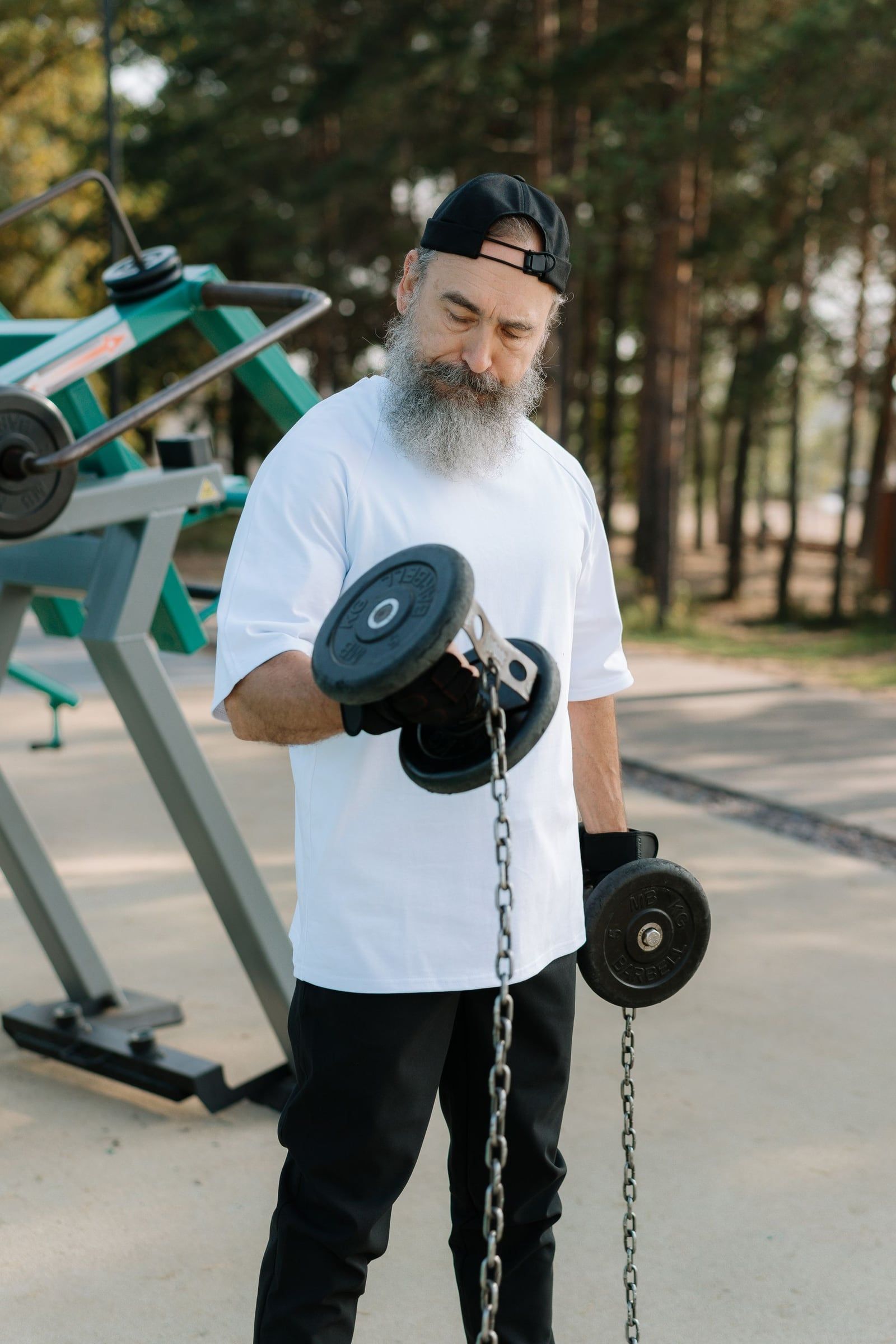
Strength training after 60: why it still works and how to start safely
Trials in people up to their late 90s show that muscle keeps responding to training. This guide is for anyone over 60 starting out, and for the family helping them, with a safe first program that includes the power and balance work most guides skip.
Muscle Growth · Guide
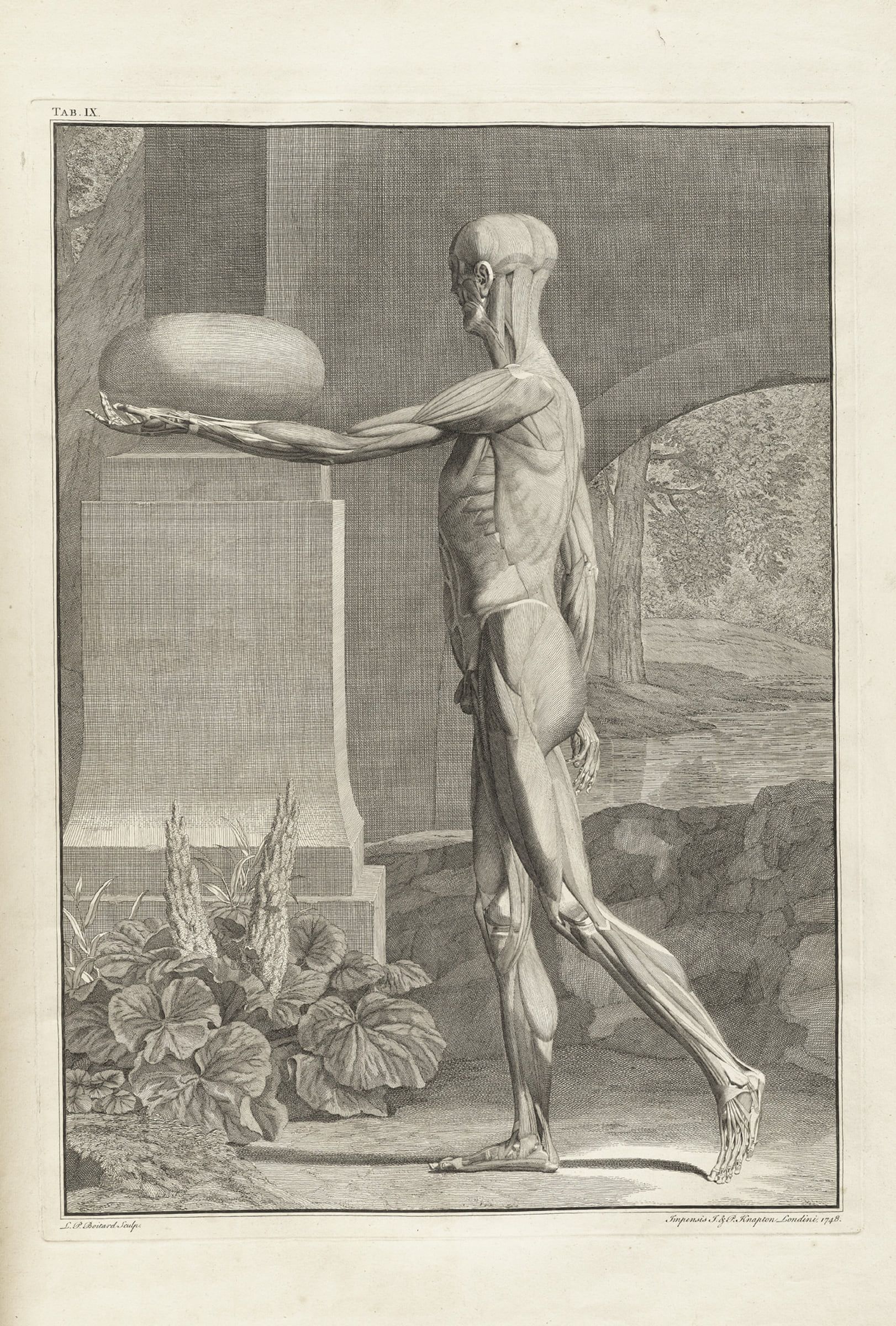
How muscles grow: the science of hypertrophy, and how to train for it
Muscle doesn't grow by tearing and healing bigger; it grows when hard sets load its fibers often enough that building outpaces breakdown. Here is the mechanism, graded by evidence, and what it means for your training week.