The best workout apps for beginners in 2027
Most beginners don't fail for lack of an app: they quit in the first weeks, do too much too soon, or follow a plan that never progresses. We judged 14 apps on how well they guard against all three, at home or in the gym.
The short answer
Budy is the best workout app for beginners. In our testing it was the best at building a whole plan from a few questions (goal, days, equipment, experience, injuries), then progressing and adjusting it, so you don't need to know programming. It costs from $7.99 a month as of November 2026. Planfit is the best free gym planner, Nike Training Club the best free classes, and StrongLifts the best way to learn the barbell lifts.
Our ranking
- 01BudyBest overall for beginners
In our testing, the best at building a whole plan from a few questions, then progressing and adjusting it, so you never have to learn programming first.
- 02FitbodBest AI workout generator
Builds every session from your goals, equipment and recovery, at home or in a gym, with multi-angle videos for 1,000+ exercises.
- 03PlanfitBest free gym planner
A free plan with weights and reps for the equipment in your gym, plus a machine guide and 1,100+ exercise videos.
- 04StrongLifts 5x5Best for learning the barbell lifts
One classic barbell program, 3 days a week, with every set and weight planned and progressed for you. Needs a barbell, a rack and a subscription.
- 05FreeleticsBest for home bodyweight training
Personalized bodyweight workouts anywhere, with 34 free workouts to start. It leans toward HIIT, so start gently.
- 06Nike Training ClubBest free classes
Free trainer-led video workouts and multi-week programs for home or gym, including beginner sessions. Nothing adapts to you.
- 07HevyBest free tracker
A fast, free logbook with exercise videos. The low-cost Hevy Pro adds a trainer that builds your program.
- 08Zing AIBest daily check-ins
Adjusts each session to daily energy, mood and sleep check-ins, with camera-based form feedback, at a higher price.
- 09GravlBest automatic overload
Clear, automatic progressive overload rounded to the plates you own. Free to start; full plans need Premium.
- 10CaliberBest path to a human coach
A strong free tracker with form videos, coach-designed plans in Caliber Plus, and optional 1-on-1 coaching.
- 11LadderBest follow-along programs
A new coach-built workout every day with in-ear coaching and video. The same program for everyone, and iPhone only.
- 12BoostcampBest free program library
Free beginner programs with automatic progression, but more than 11,000 programs can overwhelm a newcomer.
- 13JEFITBiggest exercise library
1,400+ exercises with HD video and a free tracker. The adaptive coach needs JEFIT Elite.
- 14FutureBest human coach
A real person plans and adjusts your training with you. The most expensive option here.
What we know, and how well
Every resistance training prescription compared in a network meta-analysis of randomized trials improved strength and muscle size compared with not training, and strength gains were larger with 2 or more sessions a week.
A small dose works: in the training records of 14,690 adults, 1 session a week of single sets raised strength by roughly 30 to 50% in the first year. These are observational data.
Most new exercisers stop early. In one gym, 63% of new members quit before their third month; among 389,481 app users, only 10.1% of beginners were still training weekly after a year, and consistency in the first 28 days best predicted who kept going.
Strength training delivered through apps and websites produces a small improvement in strength and muscular fitness compared with no program or usual care.
Closer supervision produces larger strength gains than less supervision, app guidance or self-guided training, in trials of untrained young men, trained adults and adults over 65.
Injury rates in weight training are low compared with common team sports, and most weight-training injuries treated in US emergency rooms came from weights dropping on the person.
Contents
- How did we choose the best workout apps for beginners?
- The best workout apps for beginners at a glance
- Which apps build the plan for you?
- The best workout apps for beginners, reviewed
- What do beginners need from a workout app?
- Should a beginner pay for a workout app?
- Which workout app should you choose as a beginner?
- Questions people ask
- References
How did we choose the best workout apps for beginners?
We ranked each app by how well it protects a beginner from the three things that most often go wrong: quitting in the first weeks, doing too much too soon, and following a plan that never progresses. Every resistance training prescription compared in a large network meta-analysis of randomized trials beat doing nothing1, so the best first app is the one that makes training easy to repeat and steadily, gently harder.
The best workout apps for beginners at a glance
All 14 apps in our order for beginners, with US App Store ratings from November 2026. Budy’s perfect score rests on just 11 ratings, because it launched in April 2026.
| # | App and how it plans | Best for | Price (US) | Platforms | App Store rating |
|---|---|---|---|---|---|
| 1 | BudyAI-built plan in 3 to 6 week blocks, each rebuilt from your progress | A full plan built around your goal, week, equipment and injuries | $7.99 to $19.99 a month, or $79.99 to $199 a year | iPhone, iPad, Apple Watch, Android, Wear OS | 5.00 (11) |
| 2 | FitbodAI generates each workout from your goals, fitness level and equipment, varies it with non-linear periodization, and learns from your edits | Gym or home workouts generated session by session from your history and equipment | Subscription after a free trial; current US plans $12.99 to $15.99 a month or $79.99 to $95.99 a year (cheaper legacy plans are also listed) | iPhone, Apple Watch, Android, Wear OS | 4.81 (291,002) |
| 3 | PlanfitPersonalized gym plans with reps and weights, plus a real-time workout coach (Premium) | Gym-goers who know the machines and want a plan built around their gym | Free core features; Premium about $11.99 a month or $79.99 a year (US App Store) | iPhone, Apple Watch, Android | 4.76 (8,555) |
| 4 | StrongLifts 5x5One fixed program (5x5, three days a week) with automated progression | Beginners learning the main barbell lifts | Subscription required; $11.99 a month, $29.99 a quarter or $59.99 a year (US App Store) | iPhone, Apple Watch, Android | 4.85 (76,974) |
| 5 | FreeleticsAI coach that personalizes each workout and adjusts to your feedback | Bodyweight and HIIT training anywhere | Coach sold in multi-month plans; US in-app prices from $34.99 | iPhone, Apple Watch, Android | 4.64 (22,303) |
| 6 | Nike Training ClubLibrary of trainer-led workouts and programs, free for Nike members | Free trainer-led classes and programs | Free | iPhone, Apple Watch, Android | 4.85 (283,414) |
| 7 | HevyWorkout tracker with a free routine library; Hevy Trainer (Pro) builds a program | Logging workouts for free, with a big community | Free; Pro from $2.99 a month, $23.99 a year or $74.99 once (US App Store) | iPhone, Apple Watch, Android | 4.92 (105,749) |
| 8 | Zing AIAI coach that adjusts workouts to daily energy, mood and sleep check-ins and your progress | Guided home and gym workouts with daily check-ins | Premium from $18.99; longer plans $29.99 to $59.99 (US App Store) | iPhone, Apple Watch, Android | 4.77 (30,782) |
| 9 | GravlAI plan that estimates your one-rep max and prescribes the next session; you rate each set | Automatic progressive overload in the gym | $14.99 a month, $34.99 for 3 months, or $59.99 to $79.99 a year (US App Store) | iPhone, Apple Watch, Android | 4.90 (6,645) |
| 10 | CaliberTracker plus coach-designed plans (Caliber Plus) and optional human coaching | Free tracking with coach-designed plans, and optional 1-on-1 coaching | Free; Caliber Plus from $12 a month or $72 a year (US App Store); human coaching costs more | iPhone, Android | 4.84 (6,944) |
| 11 | LadderCoach-built programs with a new workout each day, in-ear coaching and video | Follow-along strength programs from named coaches | From $29.99 a month or $179.99 a year; higher tiers up to $49.99 a month (US App Store) | iPhone, Apple Watch | 4.95 (227,756) |
| 12 | BoostcampFree tracker with 11,000+ programs, auto-progression, and an AI coach that builds a multi-week plan | Running proven programs (5/3/1, GZCLP, PPL) with automatic progression | Free; Pro from about $11.99 a month or $59.99 a year (US App Store) | iPhone, Android | 4.85 (11,148) |
| 13 | JEFITWorkout tracker with an AI adaptive plan and next-set suggestions; the Adaptive AI Coach is in Elite | A huge exercise library and free logging | Free; Elite $12.99 a month or $69.99 a year (US App Store) | iPhone, Apple Watch, Android | 4.76 (47,422) |
| 14 | FutureA human health coach builds and adjusts your plan across fitness, nutrition, recovery and sleep | A dedicated human coach | From $99 a month on an annual plan; monthly plans available | iPhone, Apple Watch, Android | 4.87 (10,833) |
Which apps build the plan for you?
Eight of these apps exist mainly to build and progress your training. In the table, a filled circle means the developer’s website or store listing describes the feature; a question mark means we could not verify it, not that the app lacks it.
| Feature | Budy | Fitbod | Planfit | StrongLifts 5x5 | Freeletics | Zing AI | Gravl | Boostcamp |
|---|---|---|---|---|---|---|---|---|
| Builds the whole plan for you | Yes | Yes | Yes | Yes | Yes | Yes | Yes | Yes |
| Plans months ahead toward a goal | Yes | Not verified | Partly | Partly | Partly | Not verified | Not verified | Partly |
| Asks about injuries and limits | Yes | Not verified | Not verified | Not verified | Not verified | Not verified | Not verified | Not verified |
| Adapts exercises and load around injuries | Yes | Not verified | Not verified | Not verified | Not verified | Not verified | Not verified | Not verified |
| Progresses load automatically | Yes | Partly | Partly | Yes | Yes | Yes | Yes | Yes |
| Adjusts to effort or readiness (RIR, RPE) | Partly | Not verified | Not verified | Not verified | Yes | Yes | Yes | Partly |
| Schedules deloads and phases | Yes | Partly | Not verified | Not verified | Not verified | Not verified | Not verified | Yes |
| Works with any equipment or space | Yes | Yes | Yes | No | Yes | Partly | Yes | Yes |
| Exercise video demonstrations | Yes | Yes | Yes | Not verified | Not verified | Not verified | Yes | Yes |
| Syncs with health apps and wearables | Partly | Yes | Partly | Not verified | Partly | Yes | Yes | Partly |
| Free tier | No | Not verified | Yes | No | Yes | Not verified | Partly | Yes |
| Available on Android | Yes | Yes | Yes | Yes | Yes | Yes | Yes | Yes |
Yes Partly No Not verified
Most progress your training automatically (Fitbod and Planfit partly); they differ in what they ask first and how far ahead they plan. Budy is the only app here whose own materials describe asking about injuries, joint concerns and health conditions at setup and building the plan around them, and it lays out training blocks toward a goal. Boostcamp’s programs and Planfit’s plans also look weeks ahead, while Fitbod and Gravl build one session at a time from your history.
The best workout apps for beginners, reviewed
1. Budy: best overall for beginners
Best overall for beginners
- Best for
- A full plan built around your goal, week, equipment and injuries
- How it plans
- AI-built plan in 3 to 6 week blocks, each rebuilt from your progress
- Injuries
- Asks about injuries, joint concerns and health conditions, then swaps and adjusts exercises around them
- Long-term planning
- Multi-month block plans toward your goal; public examples run 12 to 28 weeks
- Price
- $7.99 to $19.99 a month, or $79.99 to $199 a year
- Free option
- 7-day free trial on eligible plans
- Platforms
- iPhone, iPad, Apple Watch, Android, Wear OS
- App Store rating
- 5.00 from 11 ratings (US App Store, Nov 2026)
What stands out
- Plans the whole program, not just the next workout, in blocks with planned deload weeks
- Asks about injuries, joint concerns and health conditions at setup and builds around them
- Adjusts the plan when you miss sessions, change location or have less time
- Training, nutrition and a plan-aware AI coach in one app (Premium and Pro)
- Apps for iPhone, Android, Apple Watch and Wear OS, in nine languages
Watch out for
- New (launched in 2026), so it has few store ratings so far and no independent studies
- The AI coach, nutrition and voice coaching need Premium ($9.99 a month) or Pro
- No free tier beyond a 7-day trial on eligible plans
- Says plainly that it is not a rehab tool; injuries still need a clinician's input
Visit Budy Facts checked 2026-11
Budy wins because it does the part beginners find hardest: deciding what to do, and what to do next. In our testing it was the best at building a whole plan from a few questions, progressing it and adjusting it, so you don’t need to know programming. Setup asks for your goal, training days, session length, where you train, your equipment, your experience, and any injuries, joint concerns or health conditions. You choose a pace (Steady, Balanced or Fast Track), and Budy lays out a multi-month plan in blocks of about 3 to 6 weeks, each rebuilt from how the last one went. Budy says the plan adjusts when you miss a session, need a lighter day or train somewhere else, that every exercise comes with a demonstration, and that its beginner plans use simple exercises and “progression that does not assume experience you do not have yet.”
Its gaps are real. Budy is new, so as of November 2026 it has only 11 App Store ratings and no independent studies. There is no free tier beyond a 7-day trial on eligible plans; then it costs from $7.99 a month or $79.99 a year, with the AI coach, nutrition and voice coaching in Premium at $9.99 a month. Budy also says plainly that it does not diagnose injuries, provide rehabilitation or clear you to exercise, so get your limits from a clinician first. Read our full Budy review.
2. Fitbod: best AI workout generator
Best AI workout generator
- Best for
- Gym or home workouts generated session by session from your history and equipment
- How it plans
- AI generates each workout from your goals, fitness level and equipment, varies it with non-linear periodization, and learns from your edits
- Long-term planning
- Builds each session as you go rather than a dated multi-month plan
- Price
- Subscription after a free trial; current US plans $12.99 to $15.99 a month or $79.99 to $95.99 a year (cheaper legacy plans are also listed)
- Free option
- Free trial
- Platforms
- iPhone, Apple Watch, Android, Wear OS
- App Store rating
- 4.81 from 291,002 ratings (US App Store, Nov 2026)
What stands out
- Polished, proven app with more than 290,000 App Store ratings
- Builds sessions around your goals, level and equipment, and learns from your edits
- 1,000+ exercises with multi-angle videos; Apple Health, Strava, Fitbit, Apple Watch and Wear OS
Watch out for
- Plans the next workout rather than laying out a long-term plan toward a goal
- Its listing doesn't describe how it handles injuries
- US in-app price list is confusing, with several legacy plans alongside the current ones
Visit Fitbod Facts checked 2026-11
Fitbod is the most-rated AI planner here, with more than 290,000 App Store ratings. It builds each session around your goals, level and equipment and learns from your edits, and its listing describes beginner, intermediate and advanced levels and home training with no equipment. Its 1,000+ exercises come with multi-angle videos and instructions. It doesn’t plan far ahead, though: it generates the next workout from your history rather than a plan toward a goal, and its listing doesn’t describe injury handling. After a free trial it costs $12.99 to $15.99 a month or $79.99 to $95.99 a year as of November 2026; Fitbod vs Budy compares the two.
3. Planfit: best free gym planner
Best free gym planner
- Best for
- Gym-goers who know the machines and want a plan built around their gym
- How it plans
- Personalized gym plans with reps and weights, plus a real-time workout coach (Premium)
- Long-term planning
- Personalized plans for your gym's equipment that map out the weeks ahead
- Price
- Free core features; Premium about $11.99 a month or $79.99 a year (US App Store)
- Free option
- Free planner, equipment guide and log
- Platforms
- iPhone, Apple Watch, Android
- App Store rating
- 4.76 from 8,555 ratings (US App Store, Nov 2026)
What stands out
- Machine and equipment guide, with instant swaps when a machine is busy
- Generous free features
Watch out for
- Gym-focused, and its listing pitches it at people who already know their way around a gym
- Its listing doesn't describe injury handling
Visit Planfit Facts checked 2026-11
Planfit is the best free start in a gym. Its free tier builds a plan with weights and reps for your goals around your gym’s equipment, and adds a machine-by-machine guide for the newcomer’s most practical question: how does this thing work? It has 1,100+ exercise videos and suggests an alternative when a machine is taken, and Premium ($11.99 a month as of November 2026) adds a real-time workout coach and recovery tracking. Two caveats: it is built for the gym, and its own listing is written for someone who is “not a complete gym beginner.” Its listing doesn’t describe injury handling.
4. StrongLifts 5x5: best for learning the barbell lifts
Best for learning the barbell lifts
- Best for
- Beginners learning the main barbell lifts
- How it plans
- One fixed program (5x5, three days a week) with automated progression
- Long-term planning
- The classic 5x5 progression, planned for you
- Price
- Subscription required; $11.99 a month, $29.99 a quarter or $59.99 a year (US App Store)
- Free option
- 7-day trial on the yearly plan
- Platforms
- iPhone, Apple Watch, Android
- App Store rating
- 4.85 from 76,974 ratings (US App Store, Nov 2026)
What stands out
- Simple and proven for barbell beginners
- Automated progression removes the guesswork
Watch out for
- Needs a barbell and rack; one program only
- Now requires a subscription to use
Visit StrongLifts 5x5 Facts checked 2026-11
If you want to learn the classic barbell lifts, StrongLifts is the simplest way in. It runs one program, 5 sets of 5 on the squat, bench press, row, overhead press and deadlift, 3 days a week, and plans every set and weight with fully automated progression; its listing says it is made for people starting or returning to barbell training. You need a barbell and a rack, the listing doesn’t mention exercise videos, and the app requires a subscription ($11.99 a month or $59.99 a year as of November 2026). In US emergency-room data, 65.5% of weight-training injuries came from weights dropping on the person2, so use collars and safety bars.
5. Freeletics: best for home bodyweight training
Best for home bodyweight training
- Best for
- Bodyweight and HIIT training anywhere
- How it plans
- AI coach that personalizes each workout and adjusts to your feedback
- Long-term planning
- Training Journeys (30 plans with different goals)
- Price
- Coach sold in multi-month plans; US in-app prices from $34.99
- Free option
- 34 free bodyweight HIIT workouts
- Platforms
- iPhone, Apple Watch, Android
- App Store rating
- 4.64 from 22,303 ratings (US App Store, Nov 2026)
What stands out
- Excellent for training at home with no equipment
- Free tier with 34 workouts; 14-day money-back guarantee on the Coach
Watch out for
- Leans toward HIIT and conditioning more than heavy strength work
- The Coach is sold in multi-month plans, so it costs more up front
Visit Freeletics Facts checked 2026-11
Freeletics is the strongest choice for training at home with no equipment. Its AI coach personalizes each workout within a Training Journey you choose, adjusts to your feedback, and can add weights, machines or running. The free version has 34 bodyweight HIIT workouts; the Coach is sold in multi-month plans from $34.99 as of November 2026. The caution for beginners is intensity, because it leans toward HIIT. In a self-reported survey of 3,668 Freeletics users, 24% of men and 21% of women reported an injury, mostly shoulder or knee strains; injuries were less common in experienced users, and most cleared within a week3. Start gently.
6. Nike Training Club: best free classes
Best free classes
- Best for
- Free trainer-led classes and programs
- How it plans
- Library of trainer-led workouts and programs, free for Nike members
- Long-term planning
- Fixed multi-week programs you choose
- Price
- Free
- Free option
- Free for Nike members
- Platforms
- iPhone, Apple Watch, Android
- App Store rating
- 4.85 from 283,414 ratings (US App Store, Nov 2026)
What stands out
- Completely free, with high-quality trainer-led video
- Good variety for home workouts
Watch out for
- Not personalized: programs are the same for everyone
Visit Nike Training Club Facts checked 2026-11
Nike Training Club is completely free for Nike members, with trainer-led video workouts and weeks-long programs for gym or home, including beginner and equipment-free sessions. It is a good free way to see each movement demonstrated. But programs are the same for everyone and nothing adjusts the load to your progress, so you decide when to make things harder.
The rest of the field
7. Hevy is the best free tracker: no ads, fast logging, exercise videos, a large free routine library, and your last session’s numbers beside each exercise. The free app records a plan rather than building one; Hevy Pro (from $2.99 a month as of November 2026) adds a trainer that builds your program.
8. Zing AI checks in daily on your energy, mood and sleep and adjusts the session, at home or in a gym. Its listing describes real-time form feedback through your phone’s camera; we found no published study of its accuracy. Premium starts at $18.99 as of November 2026, and no free tier is stated.
9. Gravl handles progressive overload cleanly: it estimates your one-rep maximum from your logs and steps the weight up when you hit your rep targets, rounded to the plates you own. It is free to start, but full plans need Premium ($14.99 a month as of November 2026), and it covers strength training only.
10. Caliber pairs a strong free tracker (unlimited workouts, 800+ exercises, form videos) with coach-designed plans in Caliber Plus ($12 a month as of November 2026), which are templates rather than built around you. Optional 1-on-1 coaching, at a higher price, adds a trainer who reviews your form by video and your progress weekly.
11. Ladder gives you a coach-built workout every day, with in-ear coaching and video, for home or gym, and holds 4.95 stars from more than 227,000 App Store ratings (November 2026). But everyone on a team follows the same program, it is iPhone only, and it costs from $29.99 a month.
12. Boostcamp is free and includes programs written for beginners, such as 5/3/1 for Beginners, with automatic progression, form videos, and an AI coach that builds a multi-week program from a short questionnaire. With more than 11,000 programs, the hard part is choosing one.
13. JEFIT has 1,400+ exercises with HD video, a free tracker and built-in programs. Its adaptive AI coach needs JEFIT Elite ($12.99 a month as of November 2026), and its interface is busier than newer apps’.
14. Future pairs you with a dedicated human coach who builds and adjusts your plan across fitness, nutrition, recovery and sleep; its listing also includes bloodwork and a DEXA scan. It starts at $99 a month on an annual plan as of November 2026. If you want a person rather than software, start here or with a local trainer.
Apps we left out. RP Hypertrophy and JuggernautAI suit advanced muscle-building and powerlifting, Dr. Muscle is the most expensive AI app we cover, and Strong leaves the programming to you. Alpha Progression and MacroFactor Workouts, two detailed gym planners, are reviewed in our general ranking.
What do beginners need from a workout app?
A beginner needs an app that starts small, schedules 2 or 3 sessions a week, adds reps or weight in small steps, and keeps you training through the first month.
How little training does a beginner need?
Less than most people think. In a network meta-analysis of randomized trials (178 for strength and 119 for muscle size, with nearly half the participants women), every resistance training prescription improved both more than not training1. In the records of 14,690 adults (average age 48, 60% women) who trained once a week with a single hard set of 6 exercises, strength rose by roughly 30 to 50% in the first year, though these are observational data from one company4. More helps, up to a point: the American College of Sports Medicine’s 2026 position stand, which pooled 137 systematic reviews, found larger strength gains with 2 to 3 sets per exercise and 2 or more sessions a week5.
How often should a beginner train?
Two or three sessions a week. The ACSM’s 2009 guidance recommended 2 to 3 days a week for novices, with loads you can lift 8 to 12 times6, and fewer than one-third of US adults manage the recommended 2 days7. With weekly sets equal, training a muscle 1, 2 or 3 times a week produces similar growth8, so pick days you can keep, and an app that lets you set them.
Why does gradual progression matter?
A plan that never gets harder stops working, and one that ramps up too fast is harder to stick with. The 2026 ACSM stand says healthy adults should train progressively5, and its 2009 guidance advises adding 2 to 10% to the load once you can do 1 or 2 reps more than your target6. Reps count too: in 43 trained adults over 8 weeks, adding reps at the same weight built muscle and strength about as well as adding weight9. At the other extreme, higher training volumes bring more discomfort and less enjoyment, which may push people to quit10.
Can an app replace a coach?
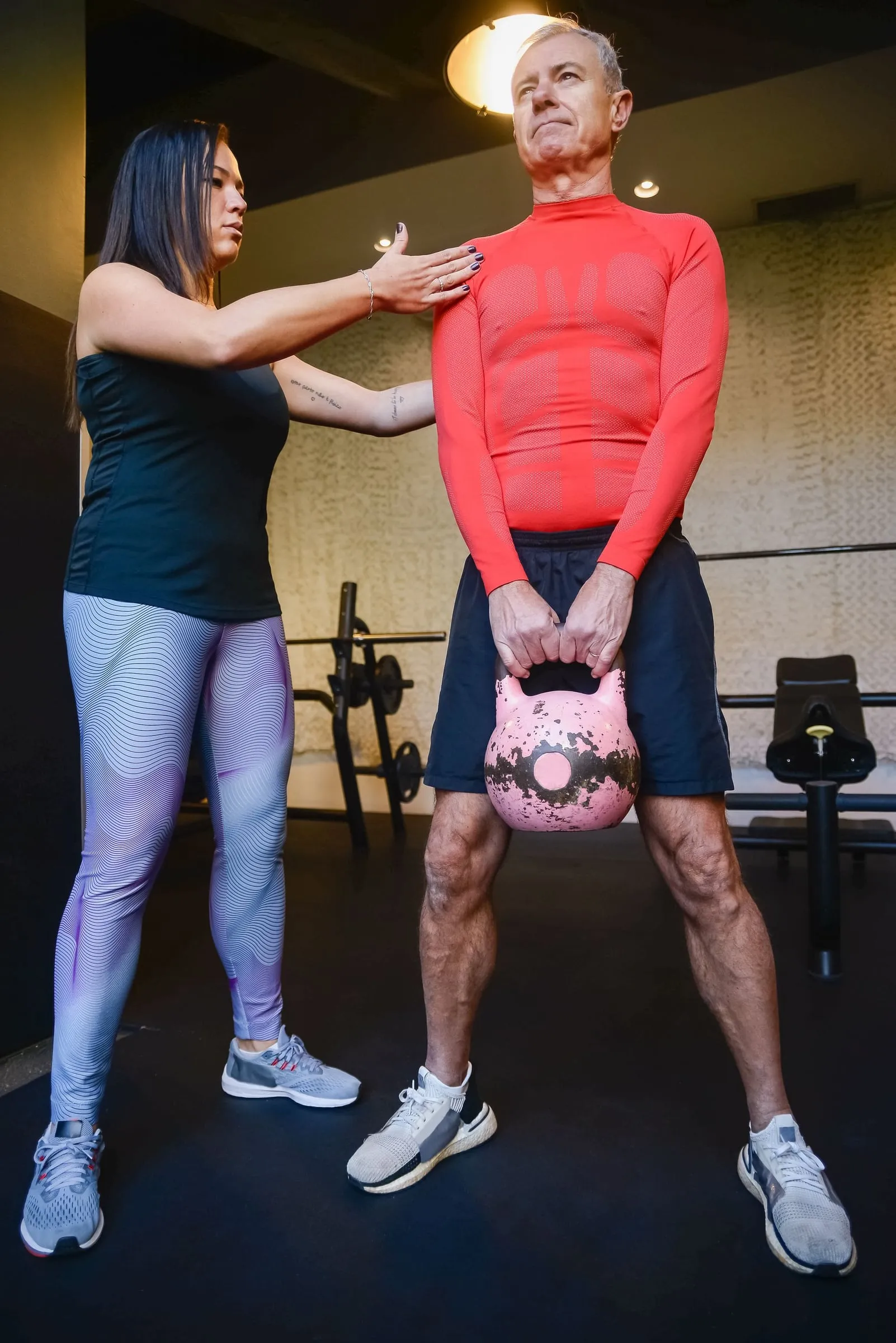
Not completely: in trials, closer supervision built more strength than app-guided or self-guided training, though apps beat having no program. In 124 untrained young men on identical 11-week programs, those trained at 1 coach per 5 lifters gained more strength than those at 1 per 25, probably because they trained harder11. In 79 trained adults over 10 weeks, in-person supervision beat app and PDF guidance for squat strength, but adherence was far higher with the app (81%) than with the PDF (52%)12. In adults 65 and over, supervision built more strength, and even a few supervised sessions narrowed the gap13. Across 32 randomized trials, mostly in clinical populations, strength training delivered by apps and websites gave a small improvement over no program or usual care14.
Why do beginners quit, and what helps?
Most new exercisers stop within months, and the first 4 weeks predict who keeps going. In one gym in Rio de Janeiro, 63% of new members dropped out before their third month and fewer than 4% kept training continuously for more than a year15. Among 389,481 workout-app users, only 10.1% of beginners were still training weekly after a year, and consistency in the first 28 days was the strongest predictor of who kept going; users aged 51 and over persisted more often than those aged 18 to 40 (13.3% against 8.4%)16. Both studies are observational, and one author of the app study worked for Fitbod.
63%of new gym members
Quit before their third month, among 5,240 members of one gym15.
10.1%of beginners
Still training weekly a year after starting, among 389,481 app users16.
28days
The early window whose consistency best predicted who kept training16.
So choose for the first month: short sessions that fit your real week, a clear next workout, and a plan that bends when you miss a day.
Is it safe to start strength training with an app?
Yes, for most people. A systematic review of competitive weight-training sports found injury rates as low as 0.24 to 1 per 1,000 hours in bodybuilding, low compared with common team sports, though most studies were retrospective17. Effort ratings need some skepticism: people misjudge how many reps they have left by about 1 on average, whatever their training background18, so an app that adjusts to how hard a set felt is only as good as your ratings. And in the Freeletics survey, injuries were less common in experienced users3, one more reason to start below your limit.
Should a beginner pay for a workout app?
Pay if you want an app to build and keep adjusting a plan around you; start free if you mainly need workouts to follow or a place to log them. Here is what the free versions include (US, as of November 2026):
| App | Free | Paying adds |
|---|---|---|
| Nike Training Club | Video classes and programs | Nothing; it is all free |
| Planfit | Gym plan with weights and reps, machine guide | Real-time coach, recovery tracking: $11.99 a month |
| Hevy | Logging, routine library, exercise videos | A program built for you: from $2.99 a month |
| Freeletics | 34 bodyweight HIIT workouts | A personalized coach: plans from $34.99 |
| Budy | The download, plus a 7-day trial on eligible plans | The whole adaptive plan: from $7.99 a month |
Planfit is the exception, with a free gym plan. Otherwise, free tiers give you workouts, programs or a logbook, and a plan that keeps adapting to you is what you pay for. Use a trial to check that the plan fits your days, equipment and level, and set a reminder before it renews.
Which workout app should you choose as a beginner?
Match the app to your situation:
- At home with no equipment: Budy builds home and bodyweight plans, Freeletics suits bodyweight HIIT, and Nike Training Club is free. Add bands or dumbbells as you get stronger: bands built strength about as well as machines and dumbbells across 8 trials19, and adjusted push-ups matched a light bench press for muscle and strength in a small 8-week trial in young men20.
- In a gym: Budy or Fitbod, or Planfit for free. Machines and free weights produced similar gains in head-to-head comparisons21, so start with what you can control.
- With a barbell: StrongLifts, plus a session with a coach.
- With a person: Future, Caliber’s coaching, or a few sessions with a local trainer.
- For free: Planfit, Nike Training Club, Hevy or Boostcamp.
- Over 60, or with an injury or health condition: pick an app that asks about health and limits, as Budy does, and read the best workout apps for older adults, strength training after 60 or training around an injury.
- Tempted by ChatGPT: coaching experts rated chatbot training plans as moderate drafts that still need expert review22. See our guide to planning training with ChatGPT and the best AI workout apps.
Questions people ask
- What is the best workout app for beginners?
- Budy, for most beginners. In our testing it was the best at building a whole plan from a few questions about your goal, schedule, equipment, experience and injuries, then progressing and adjusting it as you train. It is new, though, with few ratings and no free tier beyond a 7-day trial. Fitbod is the most-rated AI alternative, and Planfit is the best free planner for the gym.
- What is the best free workout app for beginners?
- In a gym, Planfit: its free tier builds a plan with weights and reps around your gym's equipment and includes a machine guide. At home, Nike Training Club is completely free, with trainer-led video classes and beginner programs, though nothing adapts to you. Hevy is the best free logbook, and Boostcamp has free beginner programs with automatic progression.
- Should a beginner use an AI workout app?
- Yes, if it plans gradual progression and fits your week. Across 32 randomized trials, training delivered by apps and websites improved strength a little compared with no program, and in one trial people stuck with an app far better than with a PDF plan. In-person coaching still produced the biggest gains, so book a session or two with a trainer if you can, then let the app plan the rest.
- How many days a week should a beginner work out?
- Two or three strength sessions a week. The American College of Sports Medicine recommends 2 to 3 days a week for novices, and its 2026 review of the evidence found bigger strength gains with 2 or more sessions. Even 1 session a week of single hard sets raised strength by roughly 30 to 50% over a year in one large data set, so a busy week is not a lost week.
- Can you learn proper form from a workout app?
- Partly. Most apps here show video demonstrations, which teach you what a movement should look like, but an app can't watch you unless it uses your camera, and we found no published study of how accurate camera-based form feedback is in these apps. In a trial in untrained young men, closer coaching produced bigger strength gains. For barbell lifts especially, a session or two with a qualified trainer is worth it.
- Is it worth paying for a workout app as a beginner?
- Pay when you want the app to build and adjust your plan, not just show you workouts. Most free tiers give you classes, programs or a logbook; the plan that adapts to you is what you pay for, starting at $2.99 a month for Hevy Pro, $7.99 for Budy and $12.99 for Fitbod, as of November 2026. Use the trial to check the plan fits your week, and judge results after a month.
- Can a beginner get strong at home with a workout app?
- Yes. Elastic bands built strength about as well as machines and dumbbells across 8 trials, and push-ups adjusted to match a light bench press built similar muscle and strength in a small 8-week trial. Bodyweight exercises need harder versions as you get stronger, so choose an app that progresses them, such as Budy or Freeletics, or add a set of bands or dumbbells.
References
- 1Meta-analysisCurrier BS, Mcleod JC, Banfield L, Beyene J, Welton NJ, D'Souza AC, Keogh JAJ, Lin L, Coletta G, Yang A, Colenso-Semple L, Lau KJ, Verboom A, Phillips SM (2023). Resistance training prescription for muscle strength and hypertrophy in healthy adults: a systematic review and Bayesian network meta-analysis. British Journal of Sports Medicine, 57(18), 1211-1220DOIPubMedCurrier BS, Mcleod JC, Banfield L, Beyene J, Welton NJ, D'Souza AC, Keogh JAJ, Lin L, Coletta G, Yang A, Colenso-Semple L, Lau KJ, Verboom A, Phillips SM. Resistance training prescription for muscle strength and hypertrophy in healthy adults: a systematic review and Bayesian network meta-analysis. British Journal of Sports Medicine. 2023;57(18):1211-1220. doi:10.1136/bjsports-2023-106807 PMID: 37414459
- 2Cross-sectional studyKerr ZY, Collins CL, Comstock RD (2010). Epidemiology of weight training-related injuries presenting to United States emergency departments, 1990 to 2007. The American Journal of Sports Medicine, 38(4), 765-771DOIPubMedKerr ZY, Collins CL, Comstock RD. Epidemiology of weight training-related injuries presenting to United States emergency departments, 1990 to 2007. The American Journal of Sports Medicine. 2010;38(4):765-771. doi:10.1177/0363546509351560 PMID: 20139328
- 3Cross-sectional studyHertel G, Hochrein A, Suren C, Minzlaff P, Banke IJ, Willers J, von Eisenhart-Rothe R, Prodinger PM (2022). Injury incidence and specific injury patterns in app-based bodyweight training (Freeletics): results of an international survey with 3668 participants. BMC Sports Science, Medicine and Rehabilitation, 14(1), 145DOIPubMedHertel G, Hochrein A, Suren C, Minzlaff P, Banke IJ, Willers J, von Eisenhart-Rothe R, Prodinger PM. Injury incidence and specific injury patterns in app-based bodyweight training (Freeletics): results of an international survey with 3668 participants. BMC Sports Science, Medicine and Rehabilitation. 2022;14(1):145. doi:10.1186/s13102-022-00525-y PMID: 35883184
- 4Cohort studySteele J, Fisher JP, Giessing J, Androulakis-Korakakis P, Wolf M, Kroeske B, Reuters R (2023). Long-Term Time-Course of Strength Adaptation to Minimal Dose Resistance Training Through Retrospective Longitudinal Growth Modeling. Research Quarterly for Exercise and Sport, 94(4), 913-930DOIPubMedSteele J, Fisher JP, Giessing J, Androulakis-Korakakis P, Wolf M, Kroeske B, Reuters R. Long-Term Time-Course of Strength Adaptation to Minimal Dose Resistance Training Through Retrospective Longitudinal Growth Modeling. Research Quarterly for Exercise and Sport. 2023;94(4):913-930. doi:10.1080/02701367.2022.2070592 PMID: 35591809
- 5Position standCurrier BS, D'Souza AC, Singh MAF, Lowisz CV, Rawson ES, Schoenfeld BJ, Smith-Ryan AE, Steen JP, Thomas GA, Triplett NT, Washington TA, Werner TJ, Phillips SM (2026). American College of Sports Medicine Position Stand. Resistance Training Prescription for Muscle Function, Hypertrophy, and Physical Performance in Healthy Adults: An Overview of Reviews. Medicine and Science in Sports and Exercise, 58(4), 851-872DOIPubMedCurrier BS, D'Souza AC, Singh MAF, Lowisz CV, Rawson ES, Schoenfeld BJ, Smith-Ryan AE, Steen JP, Thomas GA, Triplett NT, Washington TA, Werner TJ, Phillips SM. American College of Sports Medicine Position Stand. Resistance Training Prescription for Muscle Function, Hypertrophy, and Physical Performance in Healthy Adults: An Overview of Reviews. Medicine and Science in Sports and Exercise. 2026;58(4):851-872. doi:10.1249/MSS.0000000000003897 PMID: 41843416
- 6Position standAmerican College of Sports Medicine (2009). Progression models in resistance training for healthy adults. Medicine and Science in Sports and Exercise, 41(3), 687-708DOIPubMedAmerican College of Sports Medicine. Progression models in resistance training for healthy adults. Medicine and Science in Sports and Exercise. 2009;41(3):687-708. doi:10.1249/MSS.0b013e3181915670 PMID: 19204579
- 7Consensus statementPaluch AE, Boyer WR, Franklin BA, Laddu D, Lobelo F, Lee DC, McDermott MM, Swift DL, Webel AR, Lane A (2024). Resistance Exercise Training in Individuals With and Without Cardiovascular Disease: 2023 Update: A Scientific Statement From the American Heart Association. Circulation, 149(3), e217-e231DOIPubMedPaluch AE, Boyer WR, Franklin BA, Laddu D, Lobelo F, Lee DC, McDermott MM, Swift DL, Webel AR, Lane A. Resistance Exercise Training in Individuals With and Without Cardiovascular Disease: 2023 Update: A Scientific Statement From the American Heart Association. Circulation. 2024;149(3):e217-e231. doi:10.1161/CIR.0000000000001189 PMID: 38059362
- 8Meta-analysisSchoenfeld BJ, Grgic J, Krieger J (2019). How many times per week should a muscle be trained to maximize muscle hypertrophy? A systematic review and meta-analysis of studies examining the effects of resistance training frequency. Journal of Sports Sciences, 37(11), 1286-1295DOIPubMedSchoenfeld BJ, Grgic J, Krieger J. How many times per week should a muscle be trained to maximize muscle hypertrophy? A systematic review and meta-analysis of studies examining the effects of resistance training frequency. Journal of Sports Sciences. 2019;37(11):1286-1295. doi:10.1080/02640414.2018.1555906 PMID: 30558493
- 9Randomized trialPlotkin D, Coleman M, Van Every D, Maldonado J, Oberlin D, Israetel M, Feather J, Alto A, Vigotsky AD, Schoenfeld BJ (2022). Progressive overload without progressing load? The effects of load or repetition progression on muscular adaptations. PeerJ, 10, e14142DOIPubMedPlotkin D, Coleman M, Van Every D, Maldonado J, Oberlin D, Israetel M, Feather J, Alto A, Vigotsky AD, Schoenfeld BJ. Progressive overload without progressing load? The effects of load or repetition progression on muscular adaptations. PeerJ. 2022;10:e14142. doi:10.7717/peerj.14142 PMID: 36199287
- 10Narrative reviewFyfe JJ, Hamilton DL, Daly RM (2022). Minimal-Dose Resistance Training for Improving Muscle Mass, Strength, and Function: A Narrative Review of Current Evidence and Practical Considerations. Sports Medicine, 52(3), 463-479DOIPubMedFyfe JJ, Hamilton DL, Daly RM. Minimal-Dose Resistance Training for Improving Muscle Mass, Strength, and Function: A Narrative Review of Current Evidence and Practical Considerations. Sports Medicine. 2022;52(3):463-479. doi:10.1007/s40279-021-01605-8 PMID: 34822137
- 11Randomized trialGentil P, Bottaro M (2010). Influence of supervision ratio on muscle adaptations to resistance training in nontrained subjects. Journal of Strength and Conditioning Research, 24(3), 639-643DOIPubMedGentil P, Bottaro M. Influence of supervision ratio on muscle adaptations to resistance training in nontrained subjects. Journal of Strength and Conditioning Research. 2010;24(3):639-643. doi:10.1519/JSC.0b013e3181ad3373 PMID: 19661830
- 12Randomized trialGavanda S, Held S, Schrey S, Oberwetter K, Lazzaro PM, Pergelt M, Geisler S (2025). Optimizing Resistance Training Outcomes: Comparing In-Person Supervision, Online Coaching, and Self-Guided Approaches: A Randomized Controlled Trial. Journal of Strength and Conditioning Research, 39(11), 1129-1137DOIPubMedGavanda S, Held S, Schrey S, Oberwetter K, Lazzaro PM, Pergelt M, Geisler S. Optimizing Resistance Training Outcomes: Comparing In-Person Supervision, Online Coaching, and Self-Guided Approaches: A Randomized Controlled Trial. Journal of Strength and Conditioning Research. 2025;39(11):1129-1137. doi:10.1519/JSC.0000000000005216 PMID: 40728831
- 13Meta-analysisLacroix A, Hortobágyi T, Beurskens R, Granacher U (2017). Effects of Supervised vs. Unsupervised Training Programs on Balance and Muscle Strength in Older Adults: A Systematic Review and Meta-Analysis. Sports Medicine, 47(11), 2341-2361DOIPubMedLacroix A, Hortobágyi T, Beurskens R, Granacher U. Effects of Supervised vs. Unsupervised Training Programs on Balance and Muscle Strength in Older Adults: A Systematic Review and Meta-Analysis. Sports Medicine. 2017;47(11):2341-2361. doi:10.1007/s40279-017-0747-6 PMID: 28573401
- 14Meta-analysisCox ER, Beacroft S, Jansson AK, Wade L, Duncan MJ, Lubans DR, Robards SL, Leitner M, Gutberlet N, Plotnikoff RC (2025). Effects of mHealth interventions to prescribe resistance training: a systematic review and meta-analysis of randomized controlled trials. International Journal of Behavioral Nutrition and Physical Activity, 23(1), 7DOIPubMedCox ER, Beacroft S, Jansson AK, Wade L, Duncan MJ, Lubans DR, Robards SL, Leitner M, Gutberlet N, Plotnikoff RC. Effects of mHealth interventions to prescribe resistance training: a systematic review and meta-analysis of randomized controlled trials. International Journal of Behavioral Nutrition and Physical Activity. 2025;23(1):7. doi:10.1186/s12966-025-01868-8 PMID: 41430613
- 15Cohort studySperandei S, Vieira MC, Reis AC (2016). Adherence to physical activity in an unsupervised setting: Explanatory variables for high attrition rates among fitness center members. Journal of Science and Medicine in Sport, 19(11), 916-920DOIPubMedSperandei S, Vieira MC, Reis AC. Adherence to physical activity in an unsupervised setting: Explanatory variables for high attrition rates among fitness center members. Journal of Science and Medicine in Sport. 2016;19(11):916-920. doi:10.1016/j.jsams.2015.12.522 PMID: 26874647
- 16Cohort studyConti F, Marzagão T, Galpin AJ, Schoenfeld BJ (2026). Predictors of long-term resistance exercise adherence: evidence from a large cohort of mobile app users of various experience levels. Frontiers in Sports and Active Living, 8, 1855668 One author was employed by Fitbod Inc.DOIPubMedConti F, Marzagão T, Galpin AJ, Schoenfeld BJ. Predictors of long-term resistance exercise adherence: evidence from a large cohort of mobile app users of various experience levels. Frontiers in Sports and Active Living. 2026;8:1855668. doi:10.3389/fspor.2026.1855668 PMID: 42638731
- 17Systematic reviewKeogh JW, Winwood PW (2017). The Epidemiology of Injuries Across the Weight-Training Sports. Sports Medicine, 47(3), 479-501DOIPubMedKeogh JW, Winwood PW. The Epidemiology of Injuries Across the Weight-Training Sports. Sports Medicine. 2017;47(3):479-501. doi:10.1007/s40279-016-0575-0 PMID: 27328853
- 18Meta-analysisHalperin I, Malleron T, Har-Nir I, Androulakis-Korakakis P, Wolf M, Fisher J, Steele J (2022). Accuracy in Predicting Repetitions to Task Failure in Resistance Exercise: A Scoping Review and Exploratory Meta-analysis. Sports Medicine, 52(2), 377-390DOIPubMedHalperin I, Malleron T, Har-Nir I, Androulakis-Korakakis P, Wolf M, Fisher J, Steele J. Accuracy in Predicting Repetitions to Task Failure in Resistance Exercise: A Scoping Review and Exploratory Meta-analysis. Sports Medicine. 2022;52(2):377-390. doi:10.1007/s40279-021-01559-x PMID: 34542869
- 19Meta-analysisLopes JSS, Machado AF, Micheletti JK, de Almeida AC, Cavina AP, Pastre CM (2019). Effects of training with elastic resistance versus conventional resistance on muscular strength: A systematic review and meta-analysis. SAGE Open Medicine, 7, 2050312119831116DOIPubMedLopes JSS, Machado AF, Micheletti JK, de Almeida AC, Cavina AP, Pastre CM. Effects of training with elastic resistance versus conventional resistance on muscular strength: A systematic review and meta-analysis. SAGE Open Medicine. 2019;7:2050312119831116. doi:10.1177/2050312119831116 PMID: 30815258
- 20Randomized trialKikuchi N, Nakazato K (2017). Low-load bench press and push-up induce similar muscle hypertrophy and strength gain. Journal of Exercise Science and Fitness, 15(1), 37-42DOIPubMedKikuchi N, Nakazato K. Low-load bench press and push-up induce similar muscle hypertrophy and strength gain. Journal of Exercise Science and Fitness. 2017;15(1):37-42. doi:10.1016/j.jesf.2017.06.003 PMID: 29541130
- 21Meta-analysisHaugen ME, Vårvik FT, Larsen S, Haugen AS, van den Tillaar R, Bjørnsen T (2023). Effect of free-weight vs. machine-based strength training on maximal strength, hypertrophy and jump performance - a systematic review and meta-analysis. BMC Sports Science, Medicine and Rehabilitation, 15(1), 103DOIPubMedHaugen ME, Vårvik FT, Larsen S, Haugen AS, van den Tillaar R, Bjørnsen T. Effect of free-weight vs. machine-based strength training on maximal strength, hypertrophy and jump performance - a systematic review and meta-analysis. BMC Sports Science, Medicine and Rehabilitation. 2023;15(1):103. doi:10.1186/s13102-023-00713-4 PMID: 37582807
- 22Cross-sectional studyHavers T, Jelonnek C, Masur L, Isenmann E, Sperlich B, Geisler S, Düking P (2025). A professional assessment of training plans for muscle hypertrophy and maximal strength developed by generative artificial intelligence. Biology of Sport, 42(4), 353-366DOIPubMedHavers T, Jelonnek C, Masur L, Isenmann E, Sperlich B, Geisler S, Düking P. A professional assessment of training plans for muscle hypertrophy and maximal strength developed by generative artificial intelligence. Biology of Sport. 2025;42(4):353-366. doi:10.5114/biolsport.2026.152350 PMID: 41048240
- 23Consensus statementRiebe D, Franklin BA, Thompson PD, Garber CE, Whitfield GP, Magal M, Pescatello LS (2015). Updating ACSM's Recommendations for Exercise Preparticipation Health Screening. Medicine and Science in Sports and Exercise, 47(11), 2473-2479DOIPubMedRiebe D, Franklin BA, Thompson PD, Garber CE, Whitfield GP, Magal M, Pescatello LS. Updating ACSM's Recommendations for Exercise Preparticipation Health Screening. Medicine and Science in Sports and Exercise. 2015;47(11):2473-2479. doi:10.1249/MSS.0000000000000664 PMID: 26473759
- 24Systematic reviewBäcker HC, Richards JT, Kienzle A, Cunningham J, Braun KF (2023). Exertional Rhabdomyolysis in Athletes: Systematic Review and Current Perspectives. Clinical Journal of Sport Medicine, 33(2), 187-194DOIPubMedBäcker HC, Richards JT, Kienzle A, Cunningham J, Braun KF. Exertional Rhabdomyolysis in Athletes: Systematic Review and Current Perspectives. Clinical Journal of Sport Medicine. 2023;33(2):187-194. doi:10.1097/JSM.0000000000001082 PMID: 36877581
Read next
Training · Guide
How to start strength training: the smallest plan that works
The minimum that works is smaller than most programs suggest. Here is what to do this week, why each choice works, and how to keep progressing for 6 months, with or without a gym.
Apps & AI · Comparison
The best workout apps for 2027, judged against the science
Apps now plan a lot of people's training. We judged 20 of them against what the research says works, from progression and recovery to injuries and long-term planning, and checked every fact at the source.
Apps & AI · Review
Budy review: the AI workout planner we rank first
Budy turns a goal into a block-by-block training plan that bends around your week and your injuries. Here is how it works, what it costs, what the research says about its methods, and where it still falls short.